
news

- First scraped
- 01-08-2026 13:38
- Last seen
- 15-09-2026 12:37
- Last changed
- 26-08-2026 06:37
Iconografia bizantina a Rethymno
La tradizione vivente dell'arte bizantina a RethymnoL'unità regionale di Rethymno, che si estende dalle sponde sabbiose del Mare cretese alle vette robuste del Monte Psiloritis, ospita una ricca collezione di monumenti religiosi.Attraverso le sue valli, le gole e i villaggi tradizionali si trovano oltre 300 chiese bizantine e decine di monasteri storici.Per il viaggiatore culturale, questi luoghi sacri non sono solo luoghi di culto, ma anche gallerie vive di arte bizantina e post-bizantina.
.All'interno di questi santuari tranquilli, le pareti raccontano una storia secolare attraverso affreschi e icone portatili.Questo articolo esplora la storia, le tecniche meticolose e i migliori esempi locali di iconografia bizantina che puoi scoprire in tutta la regione del Rethymno.
La storia e la nascita della "scuola cretana"L'iconografia bizantina è un linguaggio teologico reso in colore, forma e luce.Piuttosto che puntare a ritratti realistici, l'artista bizantino cerca di catturare l'essenza spirituale trasfigurata delle figure sante.
I periodi primi e medi bizantiniA Creta, i primi secoli dell'arte cristiana (che seguono la fine dell'Iconoclasm nell'843 d.C.) erano caratterizzati da uno stile severo, espressivo e profondamente spirituale.Gli economisti aderiscono a rigide regole dogmatiche stabilite dai Consigli Ecumenici.Le figure sono state stilizzate, raffigurate con grandi occhi per enfatizzare la vista spirituale, e messe su sfondi piatti di profonda indigo o foglia d'oro scintillante per denotare la mancanza di tempo del regno celeste.
.La caduta di Costantinopoli e il Rinascimento cretese
Il capitolo che definisce l'iconografia cretese iniziò a metà del XV secolo.Dopo la caduta di Costantinopoli nel 1453, molti dei migliori artisti, studiosi e teologi dell'Impero bizantino fuggirono dalla capitale. Cercarono rifugio a Creta, che era allora sotto l'amministrazione veneziana.
.Questa migrazione storica catalizzò la Scuola di Iconografia cretese (15-XVII secolo).In questo ambiente multiculturale, la teologia tradizionale bizantina si fonde con le proporzioni realistiche, l'illuminazione naturale e la prospettiva del Rinascimento italiano.I laboratori cretesi divennero famosi in tutto il Mediterraneo, producendo opere in forma greca (stile bizantino tradizionale) e in forma a latina (stile occidentale influenzato).
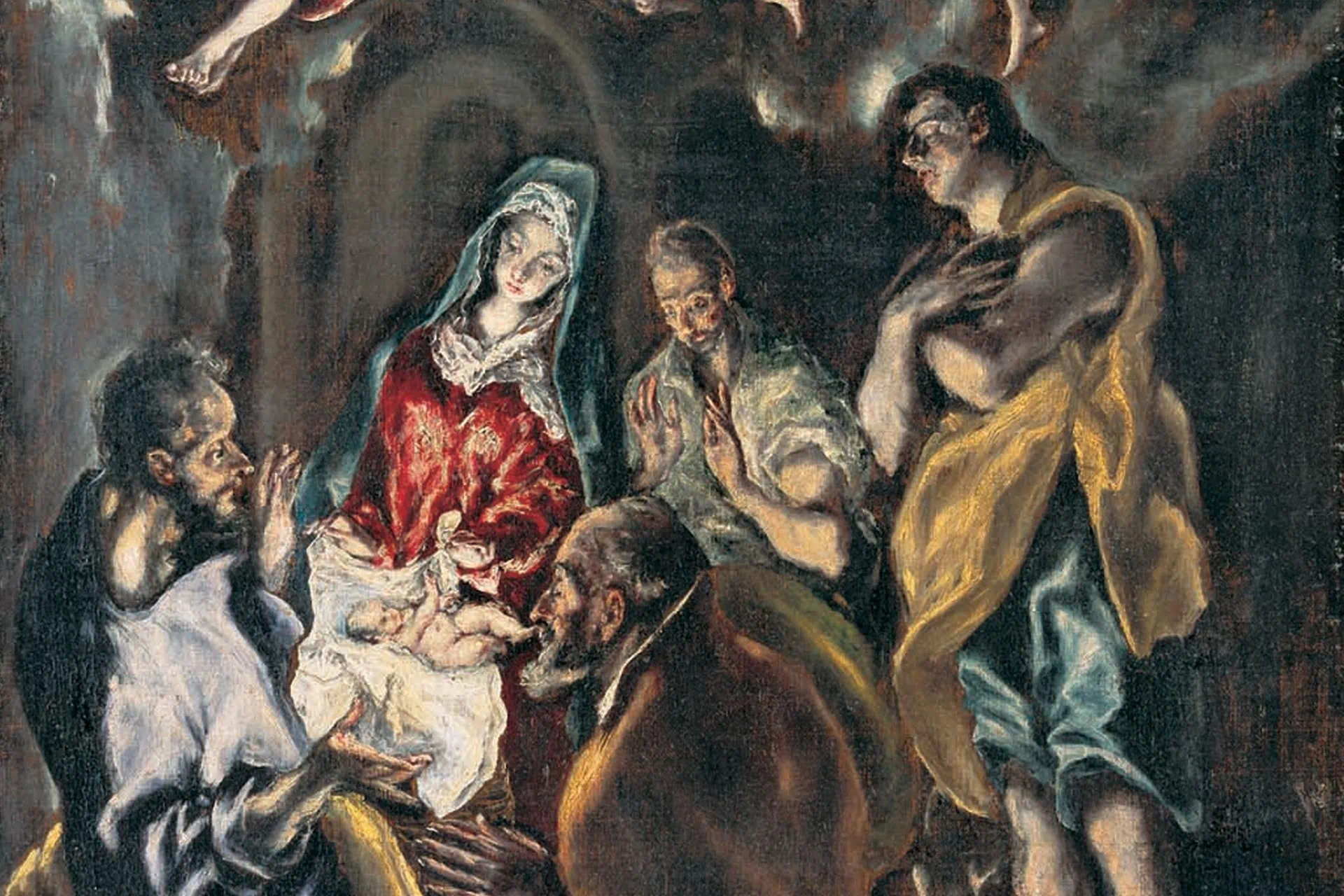
.Maestri come Angelos Akotantos, Andreas Ritzos, Michael Damaskinos, e alla fine Domenikos Theotokopoulos (che sarebbe diventato famoso in tutto il mondo come El Greco) ha sollevato l'agiografia cretese a una forma d'arte venerata a livello internazionale.
.Le Sacre Tecniche dell'Iconografo
La creazione di un'icona tradizionale bizantina è un processo lento e metodico che è rimasto in gran parte invariato per più di mille anni.Ogni passo porta un profondo significato simbolico e teologico.
1. Il supporto e la terra di Gesso
Un'icona inizia con un pannello in legno resistente alla verruca (tipicamente pioppo, pino o legno di calce).La parte anteriore del pannello è intagliata leggermente per creare un confine incassato—simbolizzare il confine tra il mondo fisico e il mondo spirituale raffigurato all'interno.
.Il legno è intagliato con strati di colla naturale di pelle animale mescolato con gesso o polvere di marmo (noto come gesso), producendo una superficie bianca perfettamente liscia e brillante che riflette la luce da sotto gli strati di vernice.
2.Gilding dell'acqua (Gold Leaf)
Prima della pittura, l'iconografo applica lo sfondo d'oro, che rappresenta la luce increata di Dio.L'artista spazzola uno strato di pasta di argilla rossa, chiamato bole, sull'alo e sullo sfondo. Dopo che il bolo è sabbiato liscio, fogli sciolti di 22 a 24 carati foglia d'oro sono applicati.L'oro è accuratamente bruciato con una pietra agata lucida, trasformando la superficie opaca in una finitura a specchio.
3. Tempera delle uova e pigmenti naturali
Le vere icone bizantine non usano l'olio o le vernici acriliche moderne.Invece, usano la tempera dell'uovo, un mezzo che combina il tuorlo d'uovo fresco (come un legante), il vino bianco o l'aceto (per prevenire lo sporcizia), e i pigmenti minerali e terra asciutti.
La tavolozza è profondamente simbolica e derivata dalla terra:Lapis Lazuli (blu) rappresenta la divinità e i regni celesti.
Red Ochre (rosso) rappresenta l'umanità e il sacrificio.
La Terra Verde (verde) rappresenta la vita e il rinnovamento.
4. Pittura da Oscuro a LuceA differenza della pittura classica occidentale, che utilizza fonti di luce esterne per lanciare ombre, un'icona bizantina è dipinta dalle tenebre alla luce. L'artista inizia con uno strato di fondazione scuro chiamato proplasma.Lentamente, strati trasparenti di toni progressivamente più leggeri (i grafimi e psimythi) sono costruiti per definire le caratteristiche.Questa tecnica dimostra visivamente il concetto teologico della luce interiore e trasfigurante che risplende dall'interno della santa figura, piuttosto che la luce che li colpisce dall'esterno.
.Importanti Siti di Iconografia Bizantina a Rethymno
La campagna di Rethymno è un magnifico "museo vivente".
.Se si desidera sperimentare la bellezza di dipinti murali bizantini e icone storiche in situ, diverse chiese e monasteri sono altamente raccomandati.
Vicino a Rethymno Città: Chromonastiri & Agia IriniA breve distanza in auto a sud di Rethymno, il villaggio di Chromonastiri e i suoi dintorni offrono ottimi esempi di hagiografia medievale precoce:
Chiesa di Agios Eftychios (Chromonastiri) :Questa chiesa a cupola a forma singola, cruciforme, ospita affreschi risalenti all'XI secolo .Questi rappresentano alcuni dei primi dipinti murali a Creta, che mostrano uno stile severo e lineare che preda gli stili più morbidi e narrativi del successivo Rinascimento Palaeologan .
Chiesa di Panagia Kera (Chromonastiri) :Anche risalente all'XI secolo, questa chiesa crociforme presenta raffigurazioni notevoli, altamente stilizzate della Vergine Maria e di altri santi.
Monastero di Agia Irini:Originariamente fondata nel XIV secolo e splendidamente restaurata, questo monastero attivo è una tappa essenziale.Le suore residenti continuano a praticare l'antica arte dell'iconografia tradizionale bizantina, rendendola un luogo meraviglioso per osservare come la tradizione vivente della santa hagiografia è conservata oggi.
.La Valle di Amari - Il Cuore di Creta Bizantina
La lussureggiante valle di Amari, situata a sud-est della città di Rethymno, è eccezionalmente ricca di cappelle bizantine:
Chiesa di Panagìa a Thronos (Assunzione della Vergine) :Costruita sui resti di una basilica quattrocentesca, questa piccola chiesa a navata singola del XIV secolo contiene alcuni degli affreschi più famosi in stile Palaeologan a Creta .L'opera è profondamente espressiva, dipinta con coloranti indigeni da due distinti artisti del XIV secolo. Cercate l'elegante porta tardogotica decorata con lo stemma della storica famiglia nobiliare Kallergis .
.Chiesa di Santa Anna (Nefs Amari) : Situata vicino al villaggio di Opsigia, questa cappella presenta dipinti a parete risalenti al 1225 .Questi sono ampiamente considerati alcuni degli affreschi bizantini più antichi sopravvissuti sull'isola di Creta.
Chiesa di Panagia Mavridiani (Meronas) :Situata in un paesaggio sereno vicino a Meronas, la parte più antica di questa chiesa a due navate risale al XIII secolo e conserva affreschi suggestivi ed emotivi del periodo.
Chiesa di Panagìa a Patsos:Situata in un contesto spettacolare, questa chiesa a cupola trasversale del XIV secolo contiene raffinati affreschi paleogan dei primi del XIV secolo, dimostrando l'opera di un eccezionale laboratorio artistico.
.Regione di Mylopotamos
Chiesa di San Giovanni (Agios Ioannis) a Episkopi, Mylopotamos:Originariamente una basilica paleocristiana del V secolo, questo sito è stato ricostruito alla fine del XIII secolo con il patrocinio di Alexios Kallergis .
.Nonostante le intemperie del monumento nel corso dei secoli, i restanti affreschi del XIV secolo (come la Panagia Platytera e le scene della Pentecoste e dell'Ascensione) sono esempi di Palaeologanartista.Monasteri e musei storici
Per coloro che desiderano vedere icone portatili altamente significative della Scuola di Creta, i musei monastici della regione offrono collezioni eccezionali:
Museo del Monastero di Arkadi:Oltre al suo ruolo leggendario nella storia cretese, Arkadi è stato un vivace centro spirituale ed educativo.Il suo museo ristrutturato ospita icone portatili post-bizantine molto apprezzate, sculture in legno elaborate e paramenti liturgici ricamati in oro .
Museo del Monastero di Preveli:Situato sulla drammatica costa meridionale, il museo del complesso Piso Preveli ospita una preziosa collezione di icone che spaziano dal XVII al XIX secolo.Ospita anche la famosa, venerata Croce Santa d'argento-giardino .
Il Museo Ecclesiastico di Rethymno:Situato nel centro storico di Rethymno, vicino alla Cattedrale, questo museo ospita un'importante collezione di reliquie religiose locali, tra cui rare icone del XVI secolo, manoscritti storici e oggetti liturgici.
.La Tradizione Vivente - Iconografia Laboratori Oggi
L'arte dell'icona è lontana da una reliquia del passato a Rethymno; rimane un mestiere vibrante e vivente tramandato da generazioni.Per i visitatori che desiderano vedere queste antiche tecniche in azione, diversi laboratori moderni colmano il divario tra la storia e il giorno presente.Il Monastero di Agia Irini, arroccato sulle colline che dominano Rethymno, è un centro di spicco dove le suore residenti continuano a produrre opere squisite utilizzando la tempera uovo tradizionale.Nel cuore della Città Vecchia, i maestri hagiografi mantengono viva l'eredità della Scuola di Creta attraverso studi dedicati.
.Christopher Karaviotis gestisce un rinomato laboratorio e galleria, dove non solo crea pezzi di qualità museo, ma offre anche lezioni a coloro che desiderano imparare l'arte.Allo stesso modo, Alexandra Icons offre laboratori di iconografia specializzati, fornendo agli studenti un'esperienza immersiva nella disciplina teologica e tecnica dell'artigianato.
.In questi spazi, i viaggiatori possono osservare il meticoloso processo di pittura "dark a light" e conoscere la geometria sacra e i pigmenti naturali che hanno definito l'arte spirituale cretese per oltre mezzo millennio.
Fonte ↗
La tradizione vivente dell'arte bizantina a RethymnoL'unità regionale di Rethymno, che si estende dalle sponde sabbiose del Mare cretese alle vette robuste del Monte Psiloritis, ospita una ricca collezione di monumenti religiosi.Attraverso le sue valli, le gole e i villaggi tradizionali si trovano oltre 300 chiese bizantine e decine di monasteri storici.Per il viaggiatore culturale, questi luoghi sacri non sono solo luoghi di culto, ma anche gallerie vive di arte bizantina e post-bizantina.
.All'interno di questi santuari tranquilli, le pareti raccontano una storia secolare attraverso affreschi e icone portatili.Questo articolo esplora la storia, le tecniche meticolose e i migliori esempi locali di iconografia bizantina che puoi scoprire in tutta la regione del Rethymno.
La storia e la nascita della "scuola cretana"L'iconografia bizantina è un linguaggio teologico reso in colore, forma e luce.Piuttosto che puntare a ritratti realistici, l'artista bizantino cerca di catturare l'essenza spirituale trasfigurata delle figure sante.
I periodi primi e medi bizantiniA Creta, i primi secoli dell'arte cristiana (che seguono la fine dell'Iconoclasm nell'843 d.C.) erano caratterizzati da uno stile severo, espressivo e profondamente spirituale.Gli economisti aderiscono a rigide regole dogmatiche stabilite dai Consigli Ecumenici.Le figure sono state stilizzate, raffigurate con grandi occhi per enfatizzare la vista spirituale, e messe su sfondi piatti di profonda indigo o foglia d'oro scintillante per denotare la mancanza di tempo del regno celeste.
.La caduta di Costantinopoli e il Rinascimento cretese
Il capitolo che definisce l'iconografia cretese iniziò a metà del XV secolo.Dopo la caduta di Costantinopoli nel 1453, molti dei migliori artisti, studiosi e teologi dell'Impero bizantino fuggirono dalla capitale. Cercarono rifugio a Creta, che era allora sotto l'amministrazione veneziana.
.Questa migrazione storica catalizzò la Scuola di Iconografia cretese (15-XVII secolo).In questo ambiente multiculturale, la teologia tradizionale bizantina si fonde con le proporzioni realistiche, l'illuminazione naturale e la prospettiva del Rinascimento italiano.I laboratori cretesi divennero famosi in tutto il Mediterraneo, producendo opere in forma greca (stile bizantino tradizionale) e in forma a latina (stile occidentale influenzato).
.Maestri come Angelos Akotantos, Andreas Ritzos, Michael Damaskinos, e alla fine Domenikos Theotokopoulos (che sarebbe diventato famoso in tutto il mondo come El Greco) ha sollevato l'agiografia cretese a una forma d'arte venerata a livello internazionale.
.Le Sacre Tecniche dell'Iconografo
La creazione di un'icona tradizionale bizantina è un processo lento e metodico che è rimasto in gran parte invariato per più di mille anni.Ogni passo porta un profondo significato simbolico e teologico.
1. Il supporto e la terra di Gesso
Un'icona inizia con un pannello in legno resistente alla verruca (tipicamente pioppo, pino o legno di calce).La parte anteriore del pannello è intagliata leggermente per creare un confine incassato—simbolizzare il confine tra il mondo fisico e il mondo spirituale raffigurato all'interno.
.Il legno è intagliato con strati di colla naturale di pelle animale mescolato con gesso o polvere di marmo (noto come gesso), producendo una superficie bianca perfettamente liscia e brillante che riflette la luce da sotto gli strati di vernice.
2.Gilding dell'acqua (Gold Leaf)
Prima della pittura, l'iconografo applica lo sfondo d'oro, che rappresenta la luce increata di Dio.L'artista spazzola uno strato di pasta di argilla rossa, chiamato bole, sull'alo e sullo sfondo. Dopo che il bolo è sabbiato liscio, fogli sciolti di 22 a 24 carati foglia d'oro sono applicati.L'oro è accuratamente bruciato con una pietra agata lucida, trasformando la superficie opaca in una finitura a specchio.
3. Tempera delle uova e pigmenti naturali
Le vere icone bizantine non usano l'olio o le vernici acriliche moderne.Invece, usano la tempera dell'uovo, un mezzo che combina il tuorlo d'uovo fresco (come un legante), il vino bianco o l'aceto (per prevenire lo sporcizia), e i pigmenti minerali e terra asciutti.
La tavolozza è profondamente simbolica e derivata dalla terra:Lapis Lazuli (blu) rappresenta la divinità e i regni celesti.
Red Ochre (rosso) rappresenta l'umanità e il sacrificio.
La Terra Verde (verde) rappresenta la vita e il rinnovamento.
4. Pittura da Oscuro a LuceA differenza della pittura classica occidentale, che utilizza fonti di luce esterne per lanciare ombre, un'icona bizantina è dipinta dalle tenebre alla luce. L'artista inizia con uno strato di fondazione scuro chiamato proplasma.Lentamente, strati trasparenti di toni progressivamente più leggeri (i grafimi e psimythi) sono costruiti per definire le caratteristiche.Questa tecnica dimostra visivamente il concetto teologico della luce interiore e trasfigurante che risplende dall'interno della santa figura, piuttosto che la luce che li colpisce dall'esterno.
.Importanti Siti di Iconografia Bizantina a Rethymno
La campagna di Rethymno è un magnifico "museo vivente".
.Se si desidera sperimentare la bellezza di dipinti murali bizantini e icone storiche in situ, diverse chiese e monasteri sono altamente raccomandati.
Vicino a Rethymno Città: Chromonastiri & Agia IriniA breve distanza in auto a sud di Rethymno, il villaggio di Chromonastiri e i suoi dintorni offrono ottimi esempi di hagiografia medievale precoce:
Chiesa di Agios Eftychios (Chromonastiri) :Questa chiesa a cupola a forma singola, cruciforme, ospita affreschi risalenti all'XI secolo .Questi rappresentano alcuni dei primi dipinti murali a Creta, che mostrano uno stile severo e lineare che preda gli stili più morbidi e narrativi del successivo Rinascimento Palaeologan .
Chiesa di Panagia Kera (Chromonastiri) :Anche risalente all'XI secolo, questa chiesa crociforme presenta raffigurazioni notevoli, altamente stilizzate della Vergine Maria e di altri santi.
Monastero di Agia Irini:Originariamente fondata nel XIV secolo e splendidamente restaurata, questo monastero attivo è una tappa essenziale.Le suore residenti continuano a praticare l'antica arte dell'iconografia tradizionale bizantina, rendendola un luogo meraviglioso per osservare come la tradizione vivente della santa hagiografia è conservata oggi.
.La Valle di Amari - Il Cuore di Creta Bizantina
La lussureggiante valle di Amari, situata a sud-est della città di Rethymno, è eccezionalmente ricca di cappelle bizantine:
Chiesa di Panagìa a Thronos (Assunzione della Vergine) :Costruita sui resti di una basilica quattrocentesca, questa piccola chiesa a navata singola del XIV secolo contiene alcuni degli affreschi più famosi in stile Palaeologan a Creta .L'opera è profondamente espressiva, dipinta con coloranti indigeni da due distinti artisti del XIV secolo. Cercate l'elegante porta tardogotica decorata con lo stemma della storica famiglia nobiliare Kallergis .
.Chiesa di Santa Anna (Nefs Amari) : Situata vicino al villaggio di Opsigia, questa cappella presenta dipinti a parete risalenti al 1225 .Questi sono ampiamente considerati alcuni degli affreschi bizantini più antichi sopravvissuti sull'isola di Creta.
Chiesa di Panagia Mavridiani (Meronas) :Situata in un paesaggio sereno vicino a Meronas, la parte più antica di questa chiesa a due navate risale al XIII secolo e conserva affreschi suggestivi ed emotivi del periodo.
Chiesa di Panagìa a Patsos:Situata in un contesto spettacolare, questa chiesa a cupola trasversale del XIV secolo contiene raffinati affreschi paleogan dei primi del XIV secolo, dimostrando l'opera di un eccezionale laboratorio artistico.
.Regione di Mylopotamos
Chiesa di San Giovanni (Agios Ioannis) a Episkopi, Mylopotamos:Originariamente una basilica paleocristiana del V secolo, questo sito è stato ricostruito alla fine del XIII secolo con il patrocinio di Alexios Kallergis .
.Nonostante le intemperie del monumento nel corso dei secoli, i restanti affreschi del XIV secolo (come la Panagia Platytera e le scene della Pentecoste e dell'Ascensione) sono esempi di Palaeologanartista.Monasteri e musei storici
Per coloro che desiderano vedere icone portatili altamente significative della Scuola di Creta, i musei monastici della regione offrono collezioni eccezionali:
Museo del Monastero di Arkadi:Oltre al suo ruolo leggendario nella storia cretese, Arkadi è stato un vivace centro spirituale ed educativo.Il suo museo ristrutturato ospita icone portatili post-bizantine molto apprezzate, sculture in legno elaborate e paramenti liturgici ricamati in oro .
Museo del Monastero di Preveli:Situato sulla drammatica costa meridionale, il museo del complesso Piso Preveli ospita una preziosa collezione di icone che spaziano dal XVII al XIX secolo.Ospita anche la famosa, venerata Croce Santa d'argento-giardino .
Il Museo Ecclesiastico di Rethymno:Situato nel centro storico di Rethymno, vicino alla Cattedrale, questo museo ospita un'importante collezione di reliquie religiose locali, tra cui rare icone del XVI secolo, manoscritti storici e oggetti liturgici.
.La Tradizione Vivente - Iconografia Laboratori Oggi
L'arte dell'icona è lontana da una reliquia del passato a Rethymno; rimane un mestiere vibrante e vivente tramandato da generazioni.Per i visitatori che desiderano vedere queste antiche tecniche in azione, diversi laboratori moderni colmano il divario tra la storia e il giorno presente.Il Monastero di Agia Irini, arroccato sulle colline che dominano Rethymno, è un centro di spicco dove le suore residenti continuano a produrre opere squisite utilizzando la tempera uovo tradizionale.Nel cuore della Città Vecchia, i maestri hagiografi mantengono viva l'eredità della Scuola di Creta attraverso studi dedicati.
.Christopher Karaviotis gestisce un rinomato laboratorio e galleria, dove non solo crea pezzi di qualità museo, ma offre anche lezioni a coloro che desiderano imparare l'arte.Allo stesso modo, Alexandra Icons offre laboratori di iconografia specializzati, fornendo agli studenti un'esperienza immersiva nella disciplina teologica e tecnica dell'artigianato.
.In questi spazi, i viaggiatori possono osservare il meticoloso processo di pittura "dark a light" e conoscere la geometria sacra e i pigmenti naturali che hanno definito l'arte spirituale cretese per oltre mezzo millennio.
Original source text
Byzantine Iconography in
Byzantine Iconography in Rethymno
The Living Tradition of Byzantine Art in Rethymno
The regional unit of Rethymno, stretching from the sandy shores of the Cretan Sea to the rugged peaks of Mount Psiloritis, is home to a rich collection of religious monuments. Across its valleys, gorges, and traditional villages lie over 300 Byzantine-era churches and dozens of historic monasteries. For the cultural traveler, these sacred sites are not only places of worship, but also living galleries of Byzantine and Post-Byzantine art.
Within these quiet sanctuaries, the walls tell a centuries-old story through frescoes and portable icons. This article explores the history, meticulous techniques, and finest local examples of Byzantine iconography that you can discover throughout the Rethymno region.
The History and the Birth of the "Cretan School"
Byzantine iconography is a theological language rendered in color, form, and light. Rather than aiming for realistic portraiture, the Byzantine artist seeks to capture the transfigured, spiritual essence of the holy figures.
The Early and Middle Byzantine Periods
In Crete, the early centuries of Christian art (following the end of Iconoclasm in 843 AD) were characterized by a severe, expressive, and deeply spiritual style. Iconographers adhered to strict dogmatic rules established by the Ecumenical Councils. Figures were stylized, depicted with large eyes to emphasize spiritual sight, and set against flat backgrounds of deep indigo or shimmering gold leaf to denote the timelessness of the heavenly realm.
The Fall of Constantinople and the Cretan Renaissance
The defining chapter of Cretan iconography began in the mid-15th century. Following the Fall of Constantinople in 1453, many of the Byzantine Empire’s finest artists, scholars, and theologians fled the capital. They sought refuge in Crete, which was then under Venetian administration.
This historical migration catalyzed the Cretan School of Iconography (15th–17th centuries). In this multicultural environment, traditional Byzantine theology blended with the realistic proportions, natural lighting, and perspective of the Italian Renaissance. Cretan workshops became famous throughout the Mediterranean, producing works in forma greca (traditional Byzantine style) and in forma a la latina (Western-influenced style).
Masters like Angelos Akotantos, Andreas Ritzos, Michael Damaskinos, and eventually Domenikos Theotokopoulos (who would become world-famous as El Greco) raised Cretan hagiography to an internationally revered art form.
The Sacred Techniques of the Iconographer
The creation of a traditional Byzantine icon is a slow, methodical process that has remained largely unchanged for more than a thousand years. Each step carries profound symbolic and theological meaning.
1. The Support and the Gesso Ground
An icon begins with a seasoned, warp-resistant wooden panel (typically poplar, pine, or lime wood). The front of the panel is carved slightly to create a recessed border—symbolizing the boundary between the physical world and the spiritual world depicted within.
The wood is primed with layers of natural animal-skin glue mixed with chalk or marble dust (known as gesso), producing a perfectly smooth, brilliant white surface that reflects light from beneath the paint layers.
2. Water Gilding (Gold Leaf)
Before painting, the iconographer applies the gold background, which represents the uncreated light of God. The artist brushes a layer of red clay paste, called bole, onto the halo and background. After the bole is sanded smooth, loose sheets of 22 to 24-carat gold leaf are applied. The gold is carefully burnished with a polished agate stone, turning the matte surface into a mirror-like finish.
3. Egg Tempera and Natural Pigments
True Byzantine icons do not use oil or modern acrylic paints. Instead, they use egg tempera, a medium combining fresh egg yolk (as a binder), white wine or vinegar (to prevent spoilage), and dry mineral and earth pigments.
The palette is deeply symbolic and derived from the earth:
Lapis Lazuli (blue) represents divinity and the heavenly realms.
Red Ochre (red) represents humanity and sacrifice.
Green Earth (green) represents life and renewal.
4. Painting from Dark to Light
Unlike Western classical painting, which uses external light sources to cast shadows, a Byzantine icon is painted from darkness to light. The artist starts with a dark foundation layer called the proplasma. Slowly, transparent layers of progressively lighter tones (the graphems and psimythi) are built up to define features. This technique visually demonstrates the theological concept of inner, transfiguring light shining out from within the holy figure, rather than light hitting them from the outside.
Important Byzantine Iconography Sites in Rethymno
The countryside of Rethymno is a magnificent "living museum".
If you wish to experience the beauty of Byzantine wall paintings and historic icons in situ, several churches and monasteries are highly recommended.
Near Rethymno Town: Chromonastiri & Agia Irini
Just a short drive south of Rethymno, the village of Chromonastiri and its surroundings offer excellent examples of early medieval hagiography :
Church of Agios Eftychios (Chromonastiri) : This single-aisled, cruciform, domed church is home to frescoes dating back to the 11th century . These represent some of the earliest wall paintings in Crete, displaying a severe, linear style that predates the softer, narrative styles of the later Palaeologan Renaissance .
Church of Panagia Kera (Chromonastiri) : Also dating to the 11th century, this cruciform church features remarkable, highly stylized depictions of the Virgin Mary and other saints .
Monastery of Agia Irini : Originally founded in the 14th century and beautifully restored, this active nunnery is an essential stop . The resident nuns continue to practice the ancient art of traditional Byzantine iconography, making it a wonderful place to observe how the living tradition of holy hagiography is preserved today .
The Amari Valley - The Heart of Byzantine Crete
The lush Amari Valley, located southeast of Rethymno town, is exceptionally rich in Byzantine chapels :
Church of Panagia at Thronos (Assumption of the Virgin) : Built on the remains of a 4th-century basilica, this small, 14th-century single-aisled church contains some of the most famous Palaeologan-style frescoes in Crete . The artwork is deeply expressive, painted with indigenous dyes by two distinct 14th-century artists . Look for the elegant late-Gothic doorway decorated with the coat of arms of the historic Kallergis noble family .
Church of Saint Anna (Nefs Amari) : Located near the village of Opsigia, this chapel features wall paintings dating to 1225 . These are widely considered to be some of the oldest dated Byzantine frescoes surviving on the island of Crete .
Church of Panagia Mavridiani (Meronas) : Positioned in a serene landscape near Meronas, the oldest part of this two-aisled church dates back to the 13th century and preserves striking, emotive frescoes of the period .
Church of Panagia at Patsos : Located in a spectacular setting, this 14th-century cross-in-square domed church contains refined Palaeologan frescoes from the early 14th century, demonstrating the work of an exceptional artistic workshop .
Mylopotamos Region
Church of Saint John (Agios Ioannis) at Episkopi, Mylopotamos : Originally a 5th-century early Christian basilica, this site was reconstructed in the late 13th century under the patronage of Alexios Kallergis .
Despite the weathering of the monument over the centuries, the remaining 14th-century frescoes (such as the Panagia Platytera and scenes of the Pentecost and Ascension ) are highly regarded examples of Palaeologan artistry .
Historic Monasteries and Museums
For those wishing to view highly significant portable icons of the Cretan School, the region's monastic museums offer outstanding collections :
Arkadi Monastery Museum : Beyond its legendary role in Cretan history, Arkadi was a vibrant spiritual and educational center . Its renovated museum houses highly prized post-Byzantine portable icons, elaborate wood carvings, and gold-embroidered liturgical vestments .
Preveli Monastery Museum : Located on the dramatic southern coast, the museum at the Piso Preveli complex holds a valuable collection of icons spanning from the 17th to the 19th centuries . It also houses the famous, highly revered silver-gilt Holy Cross .
The Ecclesiastical Museum of Rethymno : Situated in Rethymno’s Old Town, near the Cathedral, this museum houses an important collection of local religious relics, including rare 16th-century icons, historical manuscripts, and liturgical items .
The Living Tradition - Iconography Workshops Today
The art of the icon is far from a relic of the past in Rethymno; it remains a vibrant, living craft passed down through generations. For visitors who wish to see these ancient techniques in action, several modern workshops bridge the gap between history and the present day. The Monastery of Agia Irini , perched on the hills overlooking Rethymno, is a prominent center where the resident nuns continue to produce exquisite works using traditional egg tempera. In the heart of the Old Town, master hagiographers keep the Cretan School's legacy alive through dedicated studios.
Christopher Karaviotis operates a renowned workshop and gallery, where she not only creates museum-quality pieces but also offers lessons to those eager to learn the art. Similarly, Alexandra Icons offers specialized iconography workshops, providing students with an immersive experience in the theological and technical discipline of the craft.
In these spaces, travelers can observe the meticulous "dark-to-light" painting process and learn about the sacred geometry and natural pigments that have defined Cretan spiritual art for over half a millennium.
The Living Tradition of Byzantine Art in Rethymno
The regional unit of Rethymno, stretching from the sandy shores of the Cretan Sea to the rugged peaks of Mount Psiloritis, is home to a rich collection of religious monuments. Across its valleys, gorges, and traditional villages lie over 300 Byzantine-era churches and dozens of historic monasteries. For the cultural traveler, these sacred sites are not only places of worship, but also living galleries of Byzantine and Post-Byzantine art.
Within these quiet sanctuaries, the walls tell a centuries-old story through frescoes and portable icons. This article explores the history, meticulous techniques, and finest local examples of Byzantine iconography that you can discover throughout the Rethymno region.
The History and the Birth of the "Cretan School"
Byzantine iconography is a theological language rendered in color, form, and light. Rather than aiming for realistic portraiture, the Byzantine artist seeks to capture the transfigured, spiritual essence of the holy figures.
The Early and Middle Byzantine Periods
In Crete, the early centuries of Christian art (following the end of Iconoclasm in 843 AD) were characterized by a severe, expressive, and deeply spiritual style. Iconographers adhered to strict dogmatic rules established by the Ecumenical Councils. Figures were stylized, depicted with large eyes to emphasize spiritual sight, and set against flat backgrounds of deep indigo or shimmering gold leaf to denote the timelessness of the heavenly realm.
The Fall of Constantinople and the Cretan Renaissance
The defining chapter of Cretan iconography began in the mid-15th century. Following the Fall of Constantinople in 1453, many of the Byzantine Empire’s finest artists, scholars, and theologians fled the capital. They sought refuge in Crete, which was then under Venetian administration.
This historical migration catalyzed the Cretan School of Iconography (15th–17th centuries). In this multicultural environment, traditional Byzantine theology blended with the realistic proportions, natural lighting, and perspective of the Italian Renaissance. Cretan workshops became famous throughout the Mediterranean, producing works in forma greca (traditional Byzantine style) and in forma a la latina (Western-influenced style).
Masters like Angelos Akotantos, Andreas Ritzos, Michael Damaskinos, and eventually Domenikos Theotokopoulos (who would become world-famous as El Greco) raised Cretan hagiography to an internationally revered art form.
The Sacred Techniques of the Iconographer
The creation of a traditional Byzantine icon is a slow, methodical process that has remained largely unchanged for more than a thousand years. Each step carries profound symbolic and theological meaning.
1. The Support and the Gesso Ground
An icon begins with a seasoned, warp-resistant wooden panel (typically poplar, pine, or lime wood). The front of the panel is carved slightly to create a recessed border—symbolizing the boundary between the physical world and the spiritual world depicted within.
The wood is primed with layers of natural animal-skin glue mixed with chalk or marble dust (known as gesso), producing a perfectly smooth, brilliant white surface that reflects light from beneath the paint layers.
2. Water Gilding (Gold Leaf)
Before painting, the iconographer applies the gold background, which represents the uncreated light of God. The artist brushes a layer of red clay paste, called bole, onto the halo and background. After the bole is sanded smooth, loose sheets of 22 to 24-carat gold leaf are applied. The gold is carefully burnished with a polished agate stone, turning the matte surface into a mirror-like finish.
3. Egg Tempera and Natural Pigments
True Byzantine icons do not use oil or modern acrylic paints. Instead, they use egg tempera, a medium combining fresh egg yolk (as a binder), white wine or vinegar (to prevent spoilage), and dry mineral and earth pigments.
The palette is deeply symbolic and derived from the earth:
Lapis Lazuli (blue) represents divinity and the heavenly realms.
Red Ochre (red) represents humanity and sacrifice.
Green Earth (green) represents life and renewal.
4. Painting from Dark to Light
Unlike Western classical painting, which uses external light sources to cast shadows, a Byzantine icon is painted from darkness to light. The artist starts with a dark foundation layer called the proplasma. Slowly, transparent layers of progressively lighter tones (the graphems and psimythi) are built up to define features. This technique visually demonstrates the theological concept of inner, transfiguring light shining out from within the holy figure, rather than light hitting them from the outside.
Important Byzantine Iconography Sites in Rethymno
The countryside of Rethymno is a magnificent "living museum".
If you wish to experience the beauty of Byzantine wall paintings and historic icons in situ, several churches and monasteries are highly recommended.
Near Rethymno Town: Chromonastiri & Agia Irini
Just a short drive south of Rethymno, the village of Chromonastiri and its surroundings offer excellent examples of early medieval hagiography :
Church of Agios Eftychios (Chromonastiri) : This single-aisled, cruciform, domed church is home to frescoes dating back to the 11th century . These represent some of the earliest wall paintings in Crete, displaying a severe, linear style that predates the softer, narrative styles of the later Palaeologan Renaissance .
Church of Panagia Kera (Chromonastiri) : Also dating to the 11th century, this cruciform church features remarkable, highly stylized depictions of the Virgin Mary and other saints .
Monastery of Agia Irini : Originally founded in the 14th century and beautifully restored, this active nunnery is an essential stop . The resident nuns continue to practice the ancient art of traditional Byzantine iconography, making it a wonderful place to observe how the living tradition of holy hagiography is preserved today .
The Amari Valley - The Heart of Byzantine Crete
The lush Amari Valley, located southeast of Rethymno town, is exceptionally rich in Byzantine chapels :
Church of Panagia at Thronos (Assumption of the Virgin) : Built on the remains of a 4th-century basilica, this small, 14th-century single-aisled church contains some of the most famous Palaeologan-style frescoes in Crete . The artwork is deeply expressive, painted with indigenous dyes by two distinct 14th-century artists . Look for the elegant late-Gothic doorway decorated with the coat of arms of the historic Kallergis noble family .
Church of Saint Anna (Nefs Amari) : Located near the village of Opsigia, this chapel features wall paintings dating to 1225 . These are widely considered to be some of the oldest dated Byzantine frescoes surviving on the island of Crete .
Church of Panagia Mavridiani (Meronas) : Positioned in a serene landscape near Meronas, the oldest part of this two-aisled church dates back to the 13th century and preserves striking, emotive frescoes of the period .
Church of Panagia at Patsos : Located in a spectacular setting, this 14th-century cross-in-square domed church contains refined Palaeologan frescoes from the early 14th century, demonstrating the work of an exceptional artistic workshop .
Mylopotamos Region
Church of Saint John (Agios Ioannis) at Episkopi, Mylopotamos : Originally a 5th-century early Christian basilica, this site was reconstructed in the late 13th century under the patronage of Alexios Kallergis .
Despite the weathering of the monument over the centuries, the remaining 14th-century frescoes (such as the Panagia Platytera and scenes of the Pentecost and Ascension ) are highly regarded examples of Palaeologan artistry .
Historic Monasteries and Museums
For those wishing to view highly significant portable icons of the Cretan School, the region's monastic museums offer outstanding collections :
Arkadi Monastery Museum : Beyond its legendary role in Cretan history, Arkadi was a vibrant spiritual and educational center . Its renovated museum houses highly prized post-Byzantine portable icons, elaborate wood carvings, and gold-embroidered liturgical vestments .
Preveli Monastery Museum : Located on the dramatic southern coast, the museum at the Piso Preveli complex holds a valuable collection of icons spanning from the 17th to the 19th centuries . It also houses the famous, highly revered silver-gilt Holy Cross .
The Ecclesiastical Museum of Rethymno : Situated in Rethymno’s Old Town, near the Cathedral, this museum houses an important collection of local religious relics, including rare 16th-century icons, historical manuscripts, and liturgical items .
The Living Tradition - Iconography Workshops Today
The art of the icon is far from a relic of the past in Rethymno; it remains a vibrant, living craft passed down through generations. For visitors who wish to see these ancient techniques in action, several modern workshops bridge the gap between history and the present day. The Monastery of Agia Irini , perched on the hills overlooking Rethymno, is a prominent center where the resident nuns continue to produce exquisite works using traditional egg tempera. In the heart of the Old Town, master hagiographers keep the Cretan School's legacy alive through dedicated studios.
Christopher Karaviotis operates a renowned workshop and gallery, where she not only creates museum-quality pieces but also offers lessons to those eager to learn the art. Similarly, Alexandra Icons offers specialized iconography workshops, providing students with an immersive experience in the theological and technical discipline of the craft.
In these spaces, travelers can observe the meticulous "dark-to-light" painting process and learn about the sacred geometry and natural pigments that have defined Cretan spiritual art for over half a millennium.