
news

- First scraped
- 01-08-2026 13:38
- Last seen
- 15-09-2026 12:37
- Last changed
- 26-08-2026 06:37
Hotell i Rethymno
Den levende tradisjonen til bysantinsk kunst i RethymnoDen regionale enheten Rethymno som strekker seg fra Kretens kyster til de robuste toppene av Mount Psiloritis, er hjem til en rik samling av religiøse monumenter.Over sine daler, kløfter og tradisjonelle landsbyer ligger over 300 bysantinske kirker og dusinvis av historiske klostre.For den kulturelle reisende er disse hellige stedene ikke bare tilbedelsessteder, men også levende gallerier av bysantinske og post-bysantinske kunst.
.I disse rolige helligdommene forteller veggene en århundregammel historie gjennom fresker og bærbare ikoner.Denne artikkelen utforsker historien, omhyggelige teknikker og fineste lokale eksempler på bysantinsk ikonografi som du kan oppdage i hele Rethymno-regionen.
Historien og fødselen av den kretiske skolenBysantinsk ikonografi er et teologisk språk som blir gjengitt i farge, form og lys.I stedet for å satse på realistisk portrett, søker den bysantinske kunstneren å fange den omformede, åndelige essensen av de hellige figurer.
Tidlige og mellombysantinske perioderPå Kreta var de tidlige århundrene av kristen kunst (etter slutten av Iconoclasm i 843 e.Kr.) preget av en alvorlig, uttrykkelig og dypt åndelig stil.Ikonografer fulgte strenge dogmatiske regler som ble fastsatt av de økumeniske råd.Figurer ble stilisert, avbildet med store øyne for å understreke åndelig syn, og satt mot flat bakgrunn av dyp indigo eller skinnende gullblad for å betegne det himmelske rikes tidløshet.
.Konstantinopels fall og den kretensiske renessansen
Det definerende kapitlet i kretensisk ikonografi begynte på midten av 1400-tallet.Etter Konstantinopels fall i 1453 flyktet mange av det bysantinske rikets fineste kunstnere, forskere og teologer fra hovedstaden. De søkte tilflukt på Kreta, som da var under venetiansk administrasjon.
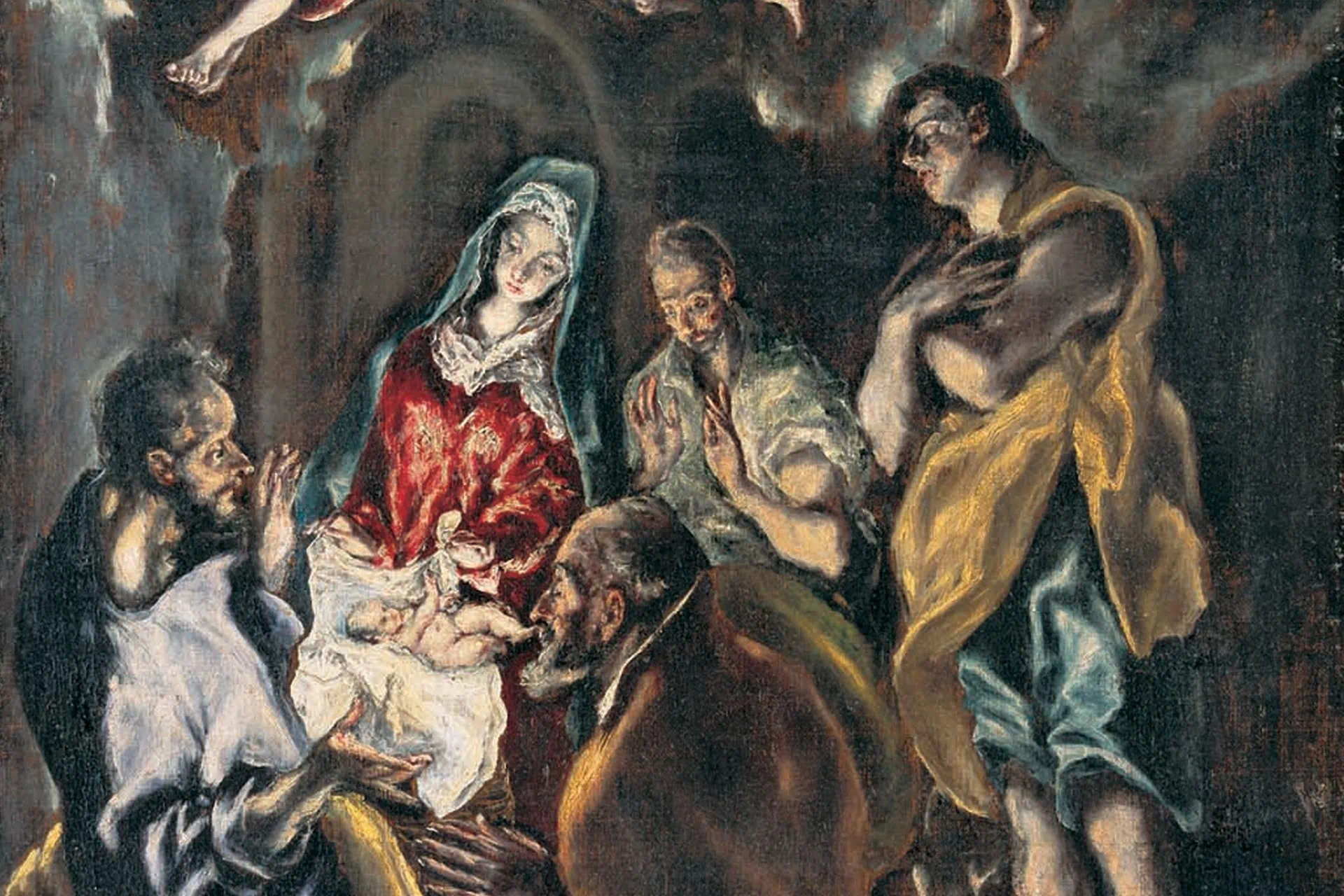
.Denne historiske migrasjonen katalyserte Cretan School of Iconography (15.-17. århundre).I dette flerkulturelle miljøet ble tradisjonell bysantinsk teologi blandet med de realistiske proporsjonene, naturlig belysning og perspektivet til den italienske renessansen.Kretensiske verksteder ble kjent i hele Middelhavet og produserte verk i forma greca (tradisjonell bysantinsk stil) og i forma en la latina (vest-influensert stil).
.Masters som Angelos Akotantos, Andreas Ritzos, Michael Damaskinos, og til slutt Domenikos Theotokopoulos (som skulle bli verdensberømt som El Greco) hevet Cretan hagiografi til en internasjonalt anerkjent kunstform.
.De hellige teknikkene til ikonografen
Et tradisjonelt bysantinsk ikon er en langsom, metodisk prosess som i stor grad har vært uendret i mer enn tusen år.Hvert steg har dyp symbolsk og teologisk betydning.
1. Støtten og Gesso Ground
Et ikon starter med en ermet, varp-resistent trepanel (vanligvis poplar, furu eller kalk tre).Fronten av panelet er skåret litt for å skape en utfelt grense - å symbolisere grensen mellom den fysiske verden og den åndelige verden som er avbildet innenfor.
.Treet er primert med lag av naturlig dyreskinn lim blandet med kritt eller marmorstøv (kjent som gesso), som produserer en perfekt glatt, strålende hvit overflate som reflekterer lys fra under maling lag.
2.Vann Gilding (Gold Leaf)
Før malingen bruker ikonografen gullbakgrunnen som representerer Guds uskapte lys.Kunstneren børster et lag av rød leire pasta, kalt bule, på halo og bakgrunn. Etter at bolen er sandet glatt, påføres løse ark på 22 til 24-karat gullblad.Gullet er forsiktig brent med en polert agate stein, og forvandler matt overflaten til en speil-lignende finish.
3. Egg Tempera og naturlige griser
Ekte bysantinske ikoner bruker ikke olje eller moderne akrylmalinger.I stedet bruker de egg tempera, et medium som kombinerer ferske eggeplommer (som bindemiddel), hvitvin eller eddik (for å hindre ruinasje) og tørre mineraler og jordpigmenter.
Paletten er dypt symbolsk og avledet fra jorden:Lapis Lazuli (blå) representerer guddommelighet og det himmelske rike.
Rød Ochre (rød) representerer menneskeheten og ofret.
Grønn Jord representerer liv og fornyelse.
4. Maling fra mørk til lysI motsetning til det vestlige klassiske maleriet, som bruker eksterne kilder til å kaste skygger, er et bysantinsk ikon malt fra mørke til lys. Kunstneren starter med et mørkt grunnlag kalt proplasma.Langsomt, gjennomsiktige lag av gradvis lettere toner (grafems og psimythi) er bygget opp for å definere funksjoner.Denne teknikken demonstrerer visuelt det teologiske konseptet av indre, transfigurerende lys som skinner ut fra den hellige figur i stedet for lys som treffer dem fra utsiden.
.Ting å gjøre i Rethymno
Rethymno er et fantastisk og levende museum.
.Hvis du ønsker å oppleve skjønnheten i bysantinske veggmalerier og historiske ikoner i situ, er flere kirker og klostre sterkt anbefalt.
I nærheten av Rethymno Town: Kromonastiri & Agia IriniBare en kort kjøretur sør for Rethymno, landsbyen Kromonastiri og dens omgivelser tilbyr utmerkede eksempler på tidlig middelalderlig hagiografi:
Agios Eftychios (Chromonastiri) :Denne single-aisled, krusiform, domed kirke er hjem til fresker som dateres tilbake til det 11. århundre.Disse representerer noen av de tidligste veggmaleriene på Kreta, som viser en alvorlig, lineær stil som predaterer den mykere, historielige stilen til den senere Palaeologan renessansen.
Panagia Kera (Chromonastriri) :Også datert til det 11. århundre, denne korsformede kirken har bemerkelsesverdige, svært stiliserte skildringer av Jomfru Maria og andre helgener.
Kloster av Agia Irini :Opprinnelig grunnlagt i det 14. århundre og vakkert restaurert, er denne aktive nunneriet en viktig stopp .De bosatte nonnene fortsetter å praktisere den gamle kunsten i tradisjonell bysantinsk ikonografi, noe som gjør det til et fantastisk sted å observere hvordan den hellige hagiografiens levende tradisjon bevares i dag.
.Amaridalen - hjertet av bysantinsk Kreta
Den frodige Amari Valley, som ligger sørøst for Rethymno byen, er usedvanlig rik på bysantinske kapeller:
Panagia kirke i Thronos (Assumption of the Jomfru) :Bygget på restene av en 4th-tallet basilika, denne lille, 14th-tallets en-aisled kirke inneholder noen av de mest berømte Palaeologan-stil fresker på Kreta.Kunstverket er dypt uttrykkelig, malt med urfolk fargestoffer av to forskjellige kunstnere fra 1300-tallet. Se etter den elegante sent-gotiske dørveien dekorert med våpenskjoldet til den historiske Kallergis edel familie.
.Church of Saint Anna (Nefs Amari) : Dette kapellet ligger i nærheten av landsbyen Opsigia, og har veggmalerier fra 1225 .Disse regnes generelt som noen av de eldste daterte bysantinske fresker som overlever på øya Kreta.
Panagia Mavridiani (Meronas)Stillt i et rolig landskap nær Meronas, den eldste delen av denne to-aislede kirken dateres tilbake til 1200-tallet og bevarer slående, emotive fresker i perioden.
Panagia kirke i Patsos:Ligger i en spektakulær innstilling, inneholder denne tverrfaglige domkirken raffinert Palaeologan fresker fra begynnelsen av 1300-tallet, som demonstrerer arbeidet til et eksepsjonelt kunstnerisk verksted.
.Mylopotamos Region
Den hellige Johanneskirke (Agios Ioannis) i Episkopi, Mylopotamos :Opprinnelig en 5. århundre tidlig kristen basilika, ble dette stedet rekonstruert i slutten av 1200-tallet under patronasjen til Alexios Kallergis.
.Til tross for forvitringen av monumentet gjennom århundrene er de gjenværende fresker fra 1300-tallet (som Panagia Platytera og scener av pinse og oppstigning) høyt ansett eksempler på Palaeologankunstneri.Historiske kloster og museer
For de som ønsker å se svært signifikante bærbare ikoner av Cretan School, tilbyr regionens monastiske museer fremragende samlinger:
Arkadi klostermuseum:Bortsett fra sin legendariske rolle i kretensisk historie var Arkadi et levende åndelig og pedagogisk senter.Dens renoverte museum huser høyt verdsatt post-Byzantin bærbare ikoner, utskjæring av tre, og gull-bromerte liturgiske vester.
Preveli klostermuseum :Ligger på den dramatiske sørkysten, museet på Piso Preveli kompleks har en verdifull samling av ikoner som strekker seg fra 1600- til 1800-tallet.Det huser også den berømte, høyt anerkjente sølv-gitt Holy Cross.
Ecclesiastical Museum of Rethymno:Dette museet ligger i Rethymnos gamleby, nær katedralen, og huser en viktig samling av lokale religiøse relikvier, inkludert sjeldne ikoner fra 1500-tallet, historiske manuskripter og liturgiske gjenstander.
.Den levende tradisjonen - Ikonografi Workshops I dag
Kunsten til ikonet er langt fra en relikvie av fortiden i Rethymno; det forblir et levende, levende håndverk gått ned gjennom generasjoner.For besøkende som ønsker å se disse gamle teknikkene i aksjon, flere moderne verksteder Bridge gap mellom historie og dagens dag.Klosteret i Agia Irini, som ligger på åsene med utsikt over Rethymno, er et fremtredende senter der de bosatte nonnene fortsetter å produsere utsøkte verker ved hjelp av tradisjonell egg temperament.I hjertet av gamlebyen holder masterhagiografene Cretan Schools arv i live gjennom dedikerte studioene.
.Christopher Karaviotis driver et kjent verksted og galleri, der hun ikke bare skaper museumskvalitetsstykker, men også tilbyr leksjoner for de ivrige etter å lære kunsten.På samme måte tilbyr Alexandra Ikoner spesialiserte ikonografi workshops, som gir studentene en fordypende erfaring i teologiske og tekniske disiplin av håndverket.
.I disse rommene kan reisende observere den nøye - mørke-til-lys - male prosessen og lære om den hellige geometrien og naturlige pigmenter som har definert kretensisk åndelig kunst i over et halvt årtusen.
Kilde ↗
Den levende tradisjonen til bysantinsk kunst i RethymnoDen regionale enheten Rethymno som strekker seg fra Kretens kyster til de robuste toppene av Mount Psiloritis, er hjem til en rik samling av religiøse monumenter.Over sine daler, kløfter og tradisjonelle landsbyer ligger over 300 bysantinske kirker og dusinvis av historiske klostre.For den kulturelle reisende er disse hellige stedene ikke bare tilbedelsessteder, men også levende gallerier av bysantinske og post-bysantinske kunst.
.I disse rolige helligdommene forteller veggene en århundregammel historie gjennom fresker og bærbare ikoner.Denne artikkelen utforsker historien, omhyggelige teknikker og fineste lokale eksempler på bysantinsk ikonografi som du kan oppdage i hele Rethymno-regionen.
Historien og fødselen av den kretiske skolenBysantinsk ikonografi er et teologisk språk som blir gjengitt i farge, form og lys.I stedet for å satse på realistisk portrett, søker den bysantinske kunstneren å fange den omformede, åndelige essensen av de hellige figurer.
Tidlige og mellombysantinske perioderPå Kreta var de tidlige århundrene av kristen kunst (etter slutten av Iconoclasm i 843 e.Kr.) preget av en alvorlig, uttrykkelig og dypt åndelig stil.Ikonografer fulgte strenge dogmatiske regler som ble fastsatt av de økumeniske råd.Figurer ble stilisert, avbildet med store øyne for å understreke åndelig syn, og satt mot flat bakgrunn av dyp indigo eller skinnende gullblad for å betegne det himmelske rikes tidløshet.
.Konstantinopels fall og den kretensiske renessansen
Det definerende kapitlet i kretensisk ikonografi begynte på midten av 1400-tallet.Etter Konstantinopels fall i 1453 flyktet mange av det bysantinske rikets fineste kunstnere, forskere og teologer fra hovedstaden. De søkte tilflukt på Kreta, som da var under venetiansk administrasjon.
.Denne historiske migrasjonen katalyserte Cretan School of Iconography (15.-17. århundre).I dette flerkulturelle miljøet ble tradisjonell bysantinsk teologi blandet med de realistiske proporsjonene, naturlig belysning og perspektivet til den italienske renessansen.Kretensiske verksteder ble kjent i hele Middelhavet og produserte verk i forma greca (tradisjonell bysantinsk stil) og i forma en la latina (vest-influensert stil).
.Masters som Angelos Akotantos, Andreas Ritzos, Michael Damaskinos, og til slutt Domenikos Theotokopoulos (som skulle bli verdensberømt som El Greco) hevet Cretan hagiografi til en internasjonalt anerkjent kunstform.
.De hellige teknikkene til ikonografen
Et tradisjonelt bysantinsk ikon er en langsom, metodisk prosess som i stor grad har vært uendret i mer enn tusen år.Hvert steg har dyp symbolsk og teologisk betydning.
1. Støtten og Gesso Ground
Et ikon starter med en ermet, varp-resistent trepanel (vanligvis poplar, furu eller kalk tre).Fronten av panelet er skåret litt for å skape en utfelt grense - å symbolisere grensen mellom den fysiske verden og den åndelige verden som er avbildet innenfor.
.Treet er primert med lag av naturlig dyreskinn lim blandet med kritt eller marmorstøv (kjent som gesso), som produserer en perfekt glatt, strålende hvit overflate som reflekterer lys fra under maling lag.
2.Vann Gilding (Gold Leaf)
Før malingen bruker ikonografen gullbakgrunnen som representerer Guds uskapte lys.Kunstneren børster et lag av rød leire pasta, kalt bule, på halo og bakgrunn. Etter at bolen er sandet glatt, påføres løse ark på 22 til 24-karat gullblad.Gullet er forsiktig brent med en polert agate stein, og forvandler matt overflaten til en speil-lignende finish.
3. Egg Tempera og naturlige griser
Ekte bysantinske ikoner bruker ikke olje eller moderne akrylmalinger.I stedet bruker de egg tempera, et medium som kombinerer ferske eggeplommer (som bindemiddel), hvitvin eller eddik (for å hindre ruinasje) og tørre mineraler og jordpigmenter.
Paletten er dypt symbolsk og avledet fra jorden:Lapis Lazuli (blå) representerer guddommelighet og det himmelske rike.
Rød Ochre (rød) representerer menneskeheten og ofret.
Grønn Jord representerer liv og fornyelse.
4. Maling fra mørk til lysI motsetning til det vestlige klassiske maleriet, som bruker eksterne kilder til å kaste skygger, er et bysantinsk ikon malt fra mørke til lys. Kunstneren starter med et mørkt grunnlag kalt proplasma.Langsomt, gjennomsiktige lag av gradvis lettere toner (grafems og psimythi) er bygget opp for å definere funksjoner.Denne teknikken demonstrerer visuelt det teologiske konseptet av indre, transfigurerende lys som skinner ut fra den hellige figur i stedet for lys som treffer dem fra utsiden.
.Ting å gjøre i Rethymno
Rethymno er et fantastisk og levende museum.
.Hvis du ønsker å oppleve skjønnheten i bysantinske veggmalerier og historiske ikoner i situ, er flere kirker og klostre sterkt anbefalt.
I nærheten av Rethymno Town: Kromonastiri & Agia IriniBare en kort kjøretur sør for Rethymno, landsbyen Kromonastiri og dens omgivelser tilbyr utmerkede eksempler på tidlig middelalderlig hagiografi:
Agios Eftychios (Chromonastiri) :Denne single-aisled, krusiform, domed kirke er hjem til fresker som dateres tilbake til det 11. århundre.Disse representerer noen av de tidligste veggmaleriene på Kreta, som viser en alvorlig, lineær stil som predaterer den mykere, historielige stilen til den senere Palaeologan renessansen.
Panagia Kera (Chromonastriri) :Også datert til det 11. århundre, denne korsformede kirken har bemerkelsesverdige, svært stiliserte skildringer av Jomfru Maria og andre helgener.
Kloster av Agia Irini :Opprinnelig grunnlagt i det 14. århundre og vakkert restaurert, er denne aktive nunneriet en viktig stopp .De bosatte nonnene fortsetter å praktisere den gamle kunsten i tradisjonell bysantinsk ikonografi, noe som gjør det til et fantastisk sted å observere hvordan den hellige hagiografiens levende tradisjon bevares i dag.
.Amaridalen - hjertet av bysantinsk Kreta
Den frodige Amari Valley, som ligger sørøst for Rethymno byen, er usedvanlig rik på bysantinske kapeller:
Panagia kirke i Thronos (Assumption of the Jomfru) :Bygget på restene av en 4th-tallet basilika, denne lille, 14th-tallets en-aisled kirke inneholder noen av de mest berømte Palaeologan-stil fresker på Kreta.Kunstverket er dypt uttrykkelig, malt med urfolk fargestoffer av to forskjellige kunstnere fra 1300-tallet. Se etter den elegante sent-gotiske dørveien dekorert med våpenskjoldet til den historiske Kallergis edel familie.
.Church of Saint Anna (Nefs Amari) : Dette kapellet ligger i nærheten av landsbyen Opsigia, og har veggmalerier fra 1225 .Disse regnes generelt som noen av de eldste daterte bysantinske fresker som overlever på øya Kreta.
Panagia Mavridiani (Meronas)Stillt i et rolig landskap nær Meronas, den eldste delen av denne to-aislede kirken dateres tilbake til 1200-tallet og bevarer slående, emotive fresker i perioden.
Panagia kirke i Patsos:Ligger i en spektakulær innstilling, inneholder denne tverrfaglige domkirken raffinert Palaeologan fresker fra begynnelsen av 1300-tallet, som demonstrerer arbeidet til et eksepsjonelt kunstnerisk verksted.
.Mylopotamos Region
Den hellige Johanneskirke (Agios Ioannis) i Episkopi, Mylopotamos :Opprinnelig en 5. århundre tidlig kristen basilika, ble dette stedet rekonstruert i slutten av 1200-tallet under patronasjen til Alexios Kallergis.
.Til tross for forvitringen av monumentet gjennom århundrene er de gjenværende fresker fra 1300-tallet (som Panagia Platytera og scener av pinse og oppstigning) høyt ansett eksempler på Palaeologankunstneri.Historiske kloster og museer
For de som ønsker å se svært signifikante bærbare ikoner av Cretan School, tilbyr regionens monastiske museer fremragende samlinger:
Arkadi klostermuseum:Bortsett fra sin legendariske rolle i kretensisk historie var Arkadi et levende åndelig og pedagogisk senter.Dens renoverte museum huser høyt verdsatt post-Byzantin bærbare ikoner, utskjæring av tre, og gull-bromerte liturgiske vester.
Preveli klostermuseum :Ligger på den dramatiske sørkysten, museet på Piso Preveli kompleks har en verdifull samling av ikoner som strekker seg fra 1600- til 1800-tallet.Det huser også den berømte, høyt anerkjente sølv-gitt Holy Cross.
Ecclesiastical Museum of Rethymno:Dette museet ligger i Rethymnos gamleby, nær katedralen, og huser en viktig samling av lokale religiøse relikvier, inkludert sjeldne ikoner fra 1500-tallet, historiske manuskripter og liturgiske gjenstander.
.Den levende tradisjonen - Ikonografi Workshops I dag
Kunsten til ikonet er langt fra en relikvie av fortiden i Rethymno; det forblir et levende, levende håndverk gått ned gjennom generasjoner.For besøkende som ønsker å se disse gamle teknikkene i aksjon, flere moderne verksteder Bridge gap mellom historie og dagens dag.Klosteret i Agia Irini, som ligger på åsene med utsikt over Rethymno, er et fremtredende senter der de bosatte nonnene fortsetter å produsere utsøkte verker ved hjelp av tradisjonell egg temperament.I hjertet av gamlebyen holder masterhagiografene Cretan Schools arv i live gjennom dedikerte studioene.
.Christopher Karaviotis driver et kjent verksted og galleri, der hun ikke bare skaper museumskvalitetsstykker, men også tilbyr leksjoner for de ivrige etter å lære kunsten.På samme måte tilbyr Alexandra Ikoner spesialiserte ikonografi workshops, som gir studentene en fordypende erfaring i teologiske og tekniske disiplin av håndverket.
.I disse rommene kan reisende observere den nøye - mørke-til-lys - male prosessen og lære om den hellige geometrien og naturlige pigmenter som har definert kretensisk åndelig kunst i over et halvt årtusen.
Original source text
Byzantine Iconography in
Byzantine Iconography in Rethymno
The Living Tradition of Byzantine Art in Rethymno
The regional unit of Rethymno, stretching from the sandy shores of the Cretan Sea to the rugged peaks of Mount Psiloritis, is home to a rich collection of religious monuments. Across its valleys, gorges, and traditional villages lie over 300 Byzantine-era churches and dozens of historic monasteries. For the cultural traveler, these sacred sites are not only places of worship, but also living galleries of Byzantine and Post-Byzantine art.
Within these quiet sanctuaries, the walls tell a centuries-old story through frescoes and portable icons. This article explores the history, meticulous techniques, and finest local examples of Byzantine iconography that you can discover throughout the Rethymno region.
The History and the Birth of the "Cretan School"
Byzantine iconography is a theological language rendered in color, form, and light. Rather than aiming for realistic portraiture, the Byzantine artist seeks to capture the transfigured, spiritual essence of the holy figures.
The Early and Middle Byzantine Periods
In Crete, the early centuries of Christian art (following the end of Iconoclasm in 843 AD) were characterized by a severe, expressive, and deeply spiritual style. Iconographers adhered to strict dogmatic rules established by the Ecumenical Councils. Figures were stylized, depicted with large eyes to emphasize spiritual sight, and set against flat backgrounds of deep indigo or shimmering gold leaf to denote the timelessness of the heavenly realm.
The Fall of Constantinople and the Cretan Renaissance
The defining chapter of Cretan iconography began in the mid-15th century. Following the Fall of Constantinople in 1453, many of the Byzantine Empire’s finest artists, scholars, and theologians fled the capital. They sought refuge in Crete, which was then under Venetian administration.
This historical migration catalyzed the Cretan School of Iconography (15th–17th centuries). In this multicultural environment, traditional Byzantine theology blended with the realistic proportions, natural lighting, and perspective of the Italian Renaissance. Cretan workshops became famous throughout the Mediterranean, producing works in forma greca (traditional Byzantine style) and in forma a la latina (Western-influenced style).
Masters like Angelos Akotantos, Andreas Ritzos, Michael Damaskinos, and eventually Domenikos Theotokopoulos (who would become world-famous as El Greco) raised Cretan hagiography to an internationally revered art form.
The Sacred Techniques of the Iconographer
The creation of a traditional Byzantine icon is a slow, methodical process that has remained largely unchanged for more than a thousand years. Each step carries profound symbolic and theological meaning.
1. The Support and the Gesso Ground
An icon begins with a seasoned, warp-resistant wooden panel (typically poplar, pine, or lime wood). The front of the panel is carved slightly to create a recessed border—symbolizing the boundary between the physical world and the spiritual world depicted within.
The wood is primed with layers of natural animal-skin glue mixed with chalk or marble dust (known as gesso), producing a perfectly smooth, brilliant white surface that reflects light from beneath the paint layers.
2. Water Gilding (Gold Leaf)
Before painting, the iconographer applies the gold background, which represents the uncreated light of God. The artist brushes a layer of red clay paste, called bole, onto the halo and background. After the bole is sanded smooth, loose sheets of 22 to 24-carat gold leaf are applied. The gold is carefully burnished with a polished agate stone, turning the matte surface into a mirror-like finish.
3. Egg Tempera and Natural Pigments
True Byzantine icons do not use oil or modern acrylic paints. Instead, they use egg tempera, a medium combining fresh egg yolk (as a binder), white wine or vinegar (to prevent spoilage), and dry mineral and earth pigments.
The palette is deeply symbolic and derived from the earth:
Lapis Lazuli (blue) represents divinity and the heavenly realms.
Red Ochre (red) represents humanity and sacrifice.
Green Earth (green) represents life and renewal.
4. Painting from Dark to Light
Unlike Western classical painting, which uses external light sources to cast shadows, a Byzantine icon is painted from darkness to light. The artist starts with a dark foundation layer called the proplasma. Slowly, transparent layers of progressively lighter tones (the graphems and psimythi) are built up to define features. This technique visually demonstrates the theological concept of inner, transfiguring light shining out from within the holy figure, rather than light hitting them from the outside.
Important Byzantine Iconography Sites in Rethymno
The countryside of Rethymno is a magnificent "living museum".
If you wish to experience the beauty of Byzantine wall paintings and historic icons in situ, several churches and monasteries are highly recommended.
Near Rethymno Town: Chromonastiri & Agia Irini
Just a short drive south of Rethymno, the village of Chromonastiri and its surroundings offer excellent examples of early medieval hagiography :
Church of Agios Eftychios (Chromonastiri) : This single-aisled, cruciform, domed church is home to frescoes dating back to the 11th century . These represent some of the earliest wall paintings in Crete, displaying a severe, linear style that predates the softer, narrative styles of the later Palaeologan Renaissance .
Church of Panagia Kera (Chromonastiri) : Also dating to the 11th century, this cruciform church features remarkable, highly stylized depictions of the Virgin Mary and other saints .
Monastery of Agia Irini : Originally founded in the 14th century and beautifully restored, this active nunnery is an essential stop . The resident nuns continue to practice the ancient art of traditional Byzantine iconography, making it a wonderful place to observe how the living tradition of holy hagiography is preserved today .
The Amari Valley - The Heart of Byzantine Crete
The lush Amari Valley, located southeast of Rethymno town, is exceptionally rich in Byzantine chapels :
Church of Panagia at Thronos (Assumption of the Virgin) : Built on the remains of a 4th-century basilica, this small, 14th-century single-aisled church contains some of the most famous Palaeologan-style frescoes in Crete . The artwork is deeply expressive, painted with indigenous dyes by two distinct 14th-century artists . Look for the elegant late-Gothic doorway decorated with the coat of arms of the historic Kallergis noble family .
Church of Saint Anna (Nefs Amari) : Located near the village of Opsigia, this chapel features wall paintings dating to 1225 . These are widely considered to be some of the oldest dated Byzantine frescoes surviving on the island of Crete .
Church of Panagia Mavridiani (Meronas) : Positioned in a serene landscape near Meronas, the oldest part of this two-aisled church dates back to the 13th century and preserves striking, emotive frescoes of the period .
Church of Panagia at Patsos : Located in a spectacular setting, this 14th-century cross-in-square domed church contains refined Palaeologan frescoes from the early 14th century, demonstrating the work of an exceptional artistic workshop .
Mylopotamos Region
Church of Saint John (Agios Ioannis) at Episkopi, Mylopotamos : Originally a 5th-century early Christian basilica, this site was reconstructed in the late 13th century under the patronage of Alexios Kallergis .
Despite the weathering of the monument over the centuries, the remaining 14th-century frescoes (such as the Panagia Platytera and scenes of the Pentecost and Ascension ) are highly regarded examples of Palaeologan artistry .
Historic Monasteries and Museums
For those wishing to view highly significant portable icons of the Cretan School, the region's monastic museums offer outstanding collections :
Arkadi Monastery Museum : Beyond its legendary role in Cretan history, Arkadi was a vibrant spiritual and educational center . Its renovated museum houses highly prized post-Byzantine portable icons, elaborate wood carvings, and gold-embroidered liturgical vestments .
Preveli Monastery Museum : Located on the dramatic southern coast, the museum at the Piso Preveli complex holds a valuable collection of icons spanning from the 17th to the 19th centuries . It also houses the famous, highly revered silver-gilt Holy Cross .
The Ecclesiastical Museum of Rethymno : Situated in Rethymno’s Old Town, near the Cathedral, this museum houses an important collection of local religious relics, including rare 16th-century icons, historical manuscripts, and liturgical items .
The Living Tradition - Iconography Workshops Today
The art of the icon is far from a relic of the past in Rethymno; it remains a vibrant, living craft passed down through generations. For visitors who wish to see these ancient techniques in action, several modern workshops bridge the gap between history and the present day. The Monastery of Agia Irini , perched on the hills overlooking Rethymno, is a prominent center where the resident nuns continue to produce exquisite works using traditional egg tempera. In the heart of the Old Town, master hagiographers keep the Cretan School's legacy alive through dedicated studios.
Christopher Karaviotis operates a renowned workshop and gallery, where she not only creates museum-quality pieces but also offers lessons to those eager to learn the art. Similarly, Alexandra Icons offers specialized iconography workshops, providing students with an immersive experience in the theological and technical discipline of the craft.
In these spaces, travelers can observe the meticulous "dark-to-light" painting process and learn about the sacred geometry and natural pigments that have defined Cretan spiritual art for over half a millennium.
The Living Tradition of Byzantine Art in Rethymno
The regional unit of Rethymno, stretching from the sandy shores of the Cretan Sea to the rugged peaks of Mount Psiloritis, is home to a rich collection of religious monuments. Across its valleys, gorges, and traditional villages lie over 300 Byzantine-era churches and dozens of historic monasteries. For the cultural traveler, these sacred sites are not only places of worship, but also living galleries of Byzantine and Post-Byzantine art.
Within these quiet sanctuaries, the walls tell a centuries-old story through frescoes and portable icons. This article explores the history, meticulous techniques, and finest local examples of Byzantine iconography that you can discover throughout the Rethymno region.
The History and the Birth of the "Cretan School"
Byzantine iconography is a theological language rendered in color, form, and light. Rather than aiming for realistic portraiture, the Byzantine artist seeks to capture the transfigured, spiritual essence of the holy figures.
The Early and Middle Byzantine Periods
In Crete, the early centuries of Christian art (following the end of Iconoclasm in 843 AD) were characterized by a severe, expressive, and deeply spiritual style. Iconographers adhered to strict dogmatic rules established by the Ecumenical Councils. Figures were stylized, depicted with large eyes to emphasize spiritual sight, and set against flat backgrounds of deep indigo or shimmering gold leaf to denote the timelessness of the heavenly realm.
The Fall of Constantinople and the Cretan Renaissance
The defining chapter of Cretan iconography began in the mid-15th century. Following the Fall of Constantinople in 1453, many of the Byzantine Empire’s finest artists, scholars, and theologians fled the capital. They sought refuge in Crete, which was then under Venetian administration.
This historical migration catalyzed the Cretan School of Iconography (15th–17th centuries). In this multicultural environment, traditional Byzantine theology blended with the realistic proportions, natural lighting, and perspective of the Italian Renaissance. Cretan workshops became famous throughout the Mediterranean, producing works in forma greca (traditional Byzantine style) and in forma a la latina (Western-influenced style).
Masters like Angelos Akotantos, Andreas Ritzos, Michael Damaskinos, and eventually Domenikos Theotokopoulos (who would become world-famous as El Greco) raised Cretan hagiography to an internationally revered art form.
The Sacred Techniques of the Iconographer
The creation of a traditional Byzantine icon is a slow, methodical process that has remained largely unchanged for more than a thousand years. Each step carries profound symbolic and theological meaning.
1. The Support and the Gesso Ground
An icon begins with a seasoned, warp-resistant wooden panel (typically poplar, pine, or lime wood). The front of the panel is carved slightly to create a recessed border—symbolizing the boundary between the physical world and the spiritual world depicted within.
The wood is primed with layers of natural animal-skin glue mixed with chalk or marble dust (known as gesso), producing a perfectly smooth, brilliant white surface that reflects light from beneath the paint layers.
2. Water Gilding (Gold Leaf)
Before painting, the iconographer applies the gold background, which represents the uncreated light of God. The artist brushes a layer of red clay paste, called bole, onto the halo and background. After the bole is sanded smooth, loose sheets of 22 to 24-carat gold leaf are applied. The gold is carefully burnished with a polished agate stone, turning the matte surface into a mirror-like finish.
3. Egg Tempera and Natural Pigments
True Byzantine icons do not use oil or modern acrylic paints. Instead, they use egg tempera, a medium combining fresh egg yolk (as a binder), white wine or vinegar (to prevent spoilage), and dry mineral and earth pigments.
The palette is deeply symbolic and derived from the earth:
Lapis Lazuli (blue) represents divinity and the heavenly realms.
Red Ochre (red) represents humanity and sacrifice.
Green Earth (green) represents life and renewal.
4. Painting from Dark to Light
Unlike Western classical painting, which uses external light sources to cast shadows, a Byzantine icon is painted from darkness to light. The artist starts with a dark foundation layer called the proplasma. Slowly, transparent layers of progressively lighter tones (the graphems and psimythi) are built up to define features. This technique visually demonstrates the theological concept of inner, transfiguring light shining out from within the holy figure, rather than light hitting them from the outside.
Important Byzantine Iconography Sites in Rethymno
The countryside of Rethymno is a magnificent "living museum".
If you wish to experience the beauty of Byzantine wall paintings and historic icons in situ, several churches and monasteries are highly recommended.
Near Rethymno Town: Chromonastiri & Agia Irini
Just a short drive south of Rethymno, the village of Chromonastiri and its surroundings offer excellent examples of early medieval hagiography :
Church of Agios Eftychios (Chromonastiri) : This single-aisled, cruciform, domed church is home to frescoes dating back to the 11th century . These represent some of the earliest wall paintings in Crete, displaying a severe, linear style that predates the softer, narrative styles of the later Palaeologan Renaissance .
Church of Panagia Kera (Chromonastiri) : Also dating to the 11th century, this cruciform church features remarkable, highly stylized depictions of the Virgin Mary and other saints .
Monastery of Agia Irini : Originally founded in the 14th century and beautifully restored, this active nunnery is an essential stop . The resident nuns continue to practice the ancient art of traditional Byzantine iconography, making it a wonderful place to observe how the living tradition of holy hagiography is preserved today .
The Amari Valley - The Heart of Byzantine Crete
The lush Amari Valley, located southeast of Rethymno town, is exceptionally rich in Byzantine chapels :
Church of Panagia at Thronos (Assumption of the Virgin) : Built on the remains of a 4th-century basilica, this small, 14th-century single-aisled church contains some of the most famous Palaeologan-style frescoes in Crete . The artwork is deeply expressive, painted with indigenous dyes by two distinct 14th-century artists . Look for the elegant late-Gothic doorway decorated with the coat of arms of the historic Kallergis noble family .
Church of Saint Anna (Nefs Amari) : Located near the village of Opsigia, this chapel features wall paintings dating to 1225 . These are widely considered to be some of the oldest dated Byzantine frescoes surviving on the island of Crete .
Church of Panagia Mavridiani (Meronas) : Positioned in a serene landscape near Meronas, the oldest part of this two-aisled church dates back to the 13th century and preserves striking, emotive frescoes of the period .
Church of Panagia at Patsos : Located in a spectacular setting, this 14th-century cross-in-square domed church contains refined Palaeologan frescoes from the early 14th century, demonstrating the work of an exceptional artistic workshop .
Mylopotamos Region
Church of Saint John (Agios Ioannis) at Episkopi, Mylopotamos : Originally a 5th-century early Christian basilica, this site was reconstructed in the late 13th century under the patronage of Alexios Kallergis .
Despite the weathering of the monument over the centuries, the remaining 14th-century frescoes (such as the Panagia Platytera and scenes of the Pentecost and Ascension ) are highly regarded examples of Palaeologan artistry .
Historic Monasteries and Museums
For those wishing to view highly significant portable icons of the Cretan School, the region's monastic museums offer outstanding collections :
Arkadi Monastery Museum : Beyond its legendary role in Cretan history, Arkadi was a vibrant spiritual and educational center . Its renovated museum houses highly prized post-Byzantine portable icons, elaborate wood carvings, and gold-embroidered liturgical vestments .
Preveli Monastery Museum : Located on the dramatic southern coast, the museum at the Piso Preveli complex holds a valuable collection of icons spanning from the 17th to the 19th centuries . It also houses the famous, highly revered silver-gilt Holy Cross .
The Ecclesiastical Museum of Rethymno : Situated in Rethymno’s Old Town, near the Cathedral, this museum houses an important collection of local religious relics, including rare 16th-century icons, historical manuscripts, and liturgical items .
The Living Tradition - Iconography Workshops Today
The art of the icon is far from a relic of the past in Rethymno; it remains a vibrant, living craft passed down through generations. For visitors who wish to see these ancient techniques in action, several modern workshops bridge the gap between history and the present day. The Monastery of Agia Irini , perched on the hills overlooking Rethymno, is a prominent center where the resident nuns continue to produce exquisite works using traditional egg tempera. In the heart of the Old Town, master hagiographers keep the Cretan School's legacy alive through dedicated studios.
Christopher Karaviotis operates a renowned workshop and gallery, where she not only creates museum-quality pieces but also offers lessons to those eager to learn the art. Similarly, Alexandra Icons offers specialized iconography workshops, providing students with an immersive experience in the theological and technical discipline of the craft.
In these spaces, travelers can observe the meticulous "dark-to-light" painting process and learn about the sacred geometry and natural pigments that have defined Cretan spiritual art for over half a millennium.