
news

- Eerst opgehaald
- 01-08-2026 13:38
- Laatst gezien
- 30-09-2026 12:37
- Laatst gewijzigd
- 26-08-2026 06:37
Byzantijnse iconografie in Puerto Rico
De levende traditie van Byzantijnse kunst in RethymnoDe regionale eenheid van Rethymno, die zich uitstrekt van de zandkust van de Kretenzerzee tot de ruige toppen van de berg Psiloritis, is de thuisbasis van een rijke verzameling religieuze monumenten.Door de valleien, kloven en traditionele dorpen liggen meer dan 300 Byzantijnse kerken en tientallen historische kloosters.Voor de culturele reiziger zijn deze heilige plaatsen niet alleen plaatsen van aanbidding, maar ook levende galerijen van Byzantijnse en Post-Byzantijnse kunst.
.Binnen deze rustige heiligdommen vertellen de muren een eeuwenoud verhaal door fresco's en draagbare iconen.Dit artikel verkent de geschiedenis, nauwgezette technieken en de mooiste lokale voorbeelden van Byzantijnse iconografie die u kunt ontdekken in de regio Rethymno.
De geschiedenis en de geboorte van de Cretan SchoolByzantijnse iconografie is een theologische taal weergegeven in kleur, vorm en licht.In plaats van te streven naar realistische portretten probeert de Byzantijnse kunstenaar de getransfigureerde, spirituele essentie van de heilige figuren vast te leggen.
De vroege en middelste Byzantijnse periodesOp Kreta werden de vroege eeuwen van de christelijke kunst (na het einde van de Iconoclasm in 843 na Christus) gekenmerkt door een ernstige, expressieve en diep spirituele stijl.Iconografen hebben zich aan strikte dogmatische regels gehouden die door de Oecumenische Raden zijn vastgesteld.Figuren werden gestileerd, afgebeeld met grote ogen om spiritueel zicht te benadrukken, en geplaatst tegen platte achtergronden van diepe indigo of glinsterende gouden blad om de tijdloosheid van het hemelse rijk aan te duiden.
.De val van Constantinopel en de Kretenzer Renaissance
Het definiërende hoofdstuk van Kretenzer iconografie begon in het midden van de 15e eeuw.Na de val van Constantinopel in 1453, vluchtten veel van het Byzantijnse Rijk de hoofdstad uit. Ze zochten hun toevlucht op Kreta, dat toen onder Venetiaanse administratie was.
.Deze historische migratie katalyseerde de Kretenzerschool van de Iconografie (15de 17de eeuw).In deze multiculturele omgeving, traditioneel Byzantijnse theologie vermengd met de realistische proporties, natuurlijke verlichting, en perspectief van de Italiaanse renaissance.Kretenzer workshops werden beroemd in de hele Middellandse Zee, het produceren van werken in forma greca (traditionele Byzantijnse stijl) en in forma a latina (westelijk beïnvloede stijl).
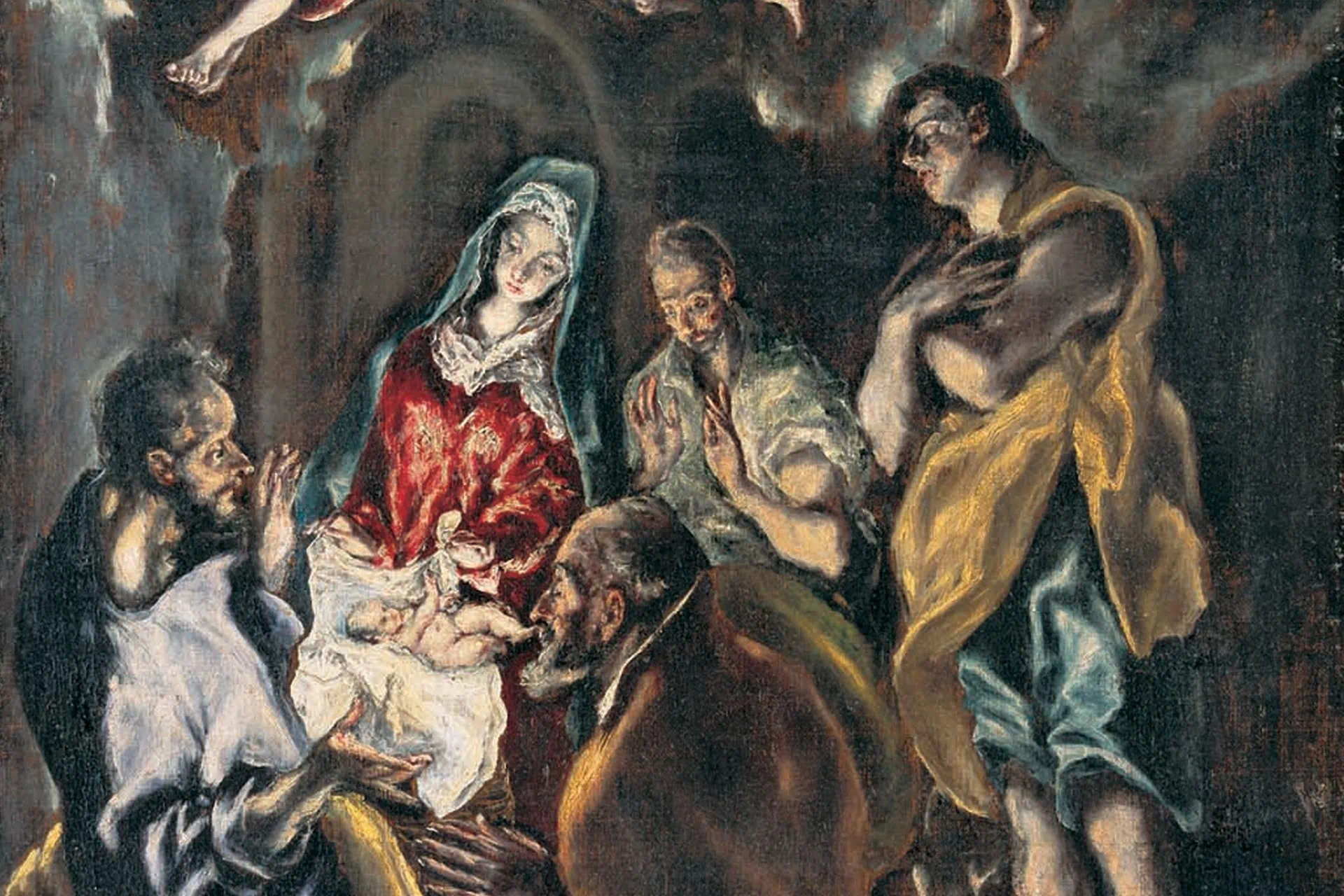
.Meesters als Angelos Akotantos, Andreas Ritzos, Michael Damaskinos, en uiteindelijk Domenikos Theotokopoulos (die wereldberoemd zou worden als El Greco) brachten Kretenzerische hagiografie tot een internationaal vereerde kunstvorm.
.De Heilige Technieken van de Iconograaf
De creatie van een traditioneel Byzantijnse icoon is een langzaam, methodisch proces dat al meer dan duizend jaar grotendeels onveranderd is gebleven.Elke stap draagt een diepe symbolische en theologische betekenis.
1. De steun en de Gesso grond
Een pictogram begint met een doorgewinterd, warpbestendig houten paneel (meestal populier, dennen of kalkhout).De voorkant van het paneel is licht gekerfd om een verzonken rand te creëren die de grens tussen de fysieke wereld en de spirituele wereld in zich symboliseert.
.Het hout is voorzien van lagen natuurlijke dierlijke huidlijm gemengd met krijt of marmeren stof (bekend als gesso), waardoor een perfect glad, briljant wit oppervlak dat licht reflecteert van onder de verflagen.
2.Water Gilding (Goudblad)
Voor het schilderen past de iconograaf de gouden achtergrond toe, die het oncreated licht van God vertegenwoordigt.De kunstenaar penselen een laag rode kleipasta, bol genoemd, op de halo en achtergrond. Nadat de bol glad is geschuurd, worden losse bladen van 22 tot 24 karaat bladgoud aangebracht.Het goud wordt zorgvuldig gebruind met een gepolijste agaatsteen, waardoor het matte oppervlak een spiegelachtige afwerking wordt.
3. Eiertempera en natuurlijke pigmenten
True Byzantijnse pictogrammen gebruiken geen olie of moderne acrylverf.In plaats daarvan gebruiken ze eiertempera, een medium dat verse eidooier (als bindmiddel), witte wijn of azijn (om bederf te voorkomen) en droge minerale en aardpigmenten combineert.
Het palet is diep symbolisch en afgeleid van de aarde:Lapis Lazuli (blauw) vertegenwoordigt goddelijkheid en de hemelse rijken.
Red Ochre (rood) vertegenwoordigt de mensheid en het offer.
Groene Aarde (groen) staat voor leven en vernieuwing.
4. Schilderen van donker tot lichtIn tegenstelling tot westerse klassieke schilderijen, die externe lichtbronnen gebruiken om schaduwen te werpen, wordt een Byzantijnse icoon geschilderd van duisternis tot licht. De kunstenaar begint met een donkere fundering laag genaamd het proplasma.Langzaam, transparante lagen van geleidelijk lichtere tonen (de grafieken en psimythi) worden opgebouwd om functies te definiëren.Deze techniek toont visueel het theologische concept van innerlijk, transfigurerend licht dat van binnenuit schijnt, in plaats van licht dat hen van buitenaf raakt.
.Belangrijke Byzantijnse Iconografie Sites in Rethymno
Het platteland van Rethymno is een prachtig "levend museum."
.Als u de schoonheid van Byzantijnse muurschilderingen en historische iconen in situ wilt ervaren, zijn verschillende kerken en kloosters zeer aan te bevelen.
Dichtbij Rethymno Stad: Chromonastiri & Agia IriniSlechts een korte rit ten zuiden van Rethymno, het dorp Chromonastiri en de omgeving bieden uitstekende voorbeelden van vroege middeleeuwse hagiografie:
Kerk van Agios Eftychios (Chromonastiri) :In deze enkele kerk, gekruisigde kerk, bevinden zich fresco's uit de 11e eeuw.Deze vertegenwoordigen enkele van de vroegste muurschilderingen op Kreta, die een ernstige, lineaire stijl vertonen die de zachtere, narratieve stijlen van de latere Palaeologan Renaissance voorgaat.
Kerk van Panagia Kera (Chromonastiri) :Ook daterend uit de 11e eeuw, deze kruisbeeld kerk vertoont opmerkelijke, sterk gestileerde afbeeldingen van de Maagd Maria en andere heiligen.
Klooster van Agia Irini:Oorspronkelijk gesticht in de 14e eeuw en prachtig gerestaureerd, is dit actieve klooster een essentiële stop.De inwonende nonnen blijven de oude kunst van de traditionele Byzantijnse iconografie beoefenen, waardoor het een prachtige plek is om te observeren hoe de levende traditie van de heilige hagiografie vandaag behouden blijft.
.De Amari vallei - Het hart van Byzantijnse Kreta
De weelderige Amari Vallei, ten zuidoosten van Rethymno stad, is uitzonderlijk rijk aan Byzantijnse kapellen:
Kerk van Panagia te Thronos (Aanname van de Maagd) :Gebouwd op de overblijfselen van een 4e-eeuwse basiliek, deze kleine, 14e-eeuwse eenpersoonskerk bevat enkele van de beroemdste Palaeologan-stijl fresco's op Kreta.Het kunstwerk is zeer expressief, geschilderd met inheemse kleurstoffen door twee verschillende 14e-eeuwse kunstenaars. Kijk voor de elegante laat-gotische deuropening versierd met het wapenschild van de historische Kallergis edel familie.
.Kerk van Saint Anna (Nefs Amari): Gelegen nabij het dorp Opsigia, deze kapel beschikt over muurschilderingen daterend uit 1225.Deze worden algemeen beschouwd als enkele van de oudste gedateerde Byzantijnse fresco's overleven op het eiland Kreta.
Kerk van Panagia Mavridiani (Meronas) :Gepositioneerd in een serene landschap in de buurt van Meronas, het oudste deel van deze twee-belaagde kerk dateert uit de 13e eeuw en behoudt opvallende, emotionele fresco's van de periode.
Kerk van Panagia in Patsos:Gelegen in een spectaculaire omgeving, deze 14e-eeuwse cross-in-kwadraat koepel kerk bevat verfijnde Paleologan fresco's uit het begin van de 14e eeuw, demonstreren het werk van een uitzonderlijke artistieke workshop.
.Regio Mylopotamos
Kerk van Johannes (Agios Ioannis) te Episkopi, Mylopotamos:Oorspronkelijk een 5e-eeuwse vroeg-christelijke basiliek, deze site werd gereconstrueerd in de late 13e eeuw onder het beschermheerschap van Alexios Kallergis .
.Ondanks het verweer van het monument door de eeuwen heen, zijn de resterende 14e-eeuwse fresco's (zoals de Panagia Platytera en scènes van de Pinksteren en Ascentie) zeer gewaardeerde voorbeelden van Palaeochanartiestenwerk .Historische kloosters en musea
Voor degenen die zeer belangrijke draagbare iconen van de Kretenzer School willen bekijken, bieden de kloostermusea van de regio uitstekende collecties:
Arkadi Klooster Museum:Naast zijn legendarische rol in de Kretenzische geschiedenis, was Arkadi een levendig spiritueel en educatief centrum.Het gerenoveerde museum huizen zeer gewaardeerd post-Byzantijnse draagbare pictogrammen, uitgebreide houtsnijwerk, en goud-geborduurde liturgische gewaden.
Preveli Klooster Museum:Gelegen aan de dramatische zuidelijke kust, het museum van het Piso Preveli complex heeft een waardevolle collectie van iconen die van de 17e tot de 19e eeuw.Het huisvest ook de beroemde, zeer vereerd zilver-gilt Holy Cross.
Het Kerkelijk Museum van Rethymno:Gelegen in Rethymnos Old Town, nabij de kathedraal, dit museum herbergt een belangrijke collectie van lokale religieuze relikwieën, waaronder zeldzame 16e-eeuwse iconen, historische manuscripten, en liturgische voorwerpen.
.De levende traditie - Iconografie Workshops vandaag
De kunst van het icoon is verre van een overblijfsel uit het verleden in Rethymno; het blijft een levendige, levende ambacht doorgegeven door generaties.Voor bezoekers die deze oude technieken in actie willen zien, overbruggen verschillende moderne workshops de kloof tussen geschiedenis en heden.Het klooster van Agia Irini , gelegen op de heuvels met uitzicht op Rethymno , is een prominent centrum waar de resident nonnen blijven om prachtige werken te produceren met behulp van traditionele ei tempera .In het hart van de oude stad, meester hagiografen houden de erfenis van de Kretenzer school in leven via toegewijde studio's.
.Christopher Karaviotis heeft een gerenommeerde werkplaats en galerie, waar ze niet alleen museum-kwaliteit stukken maakt, maar ook lessen geeft aan diegenen die graag de kunst willen leren.Ook Alexandra Icons biedt gespecialiseerde iconografieworkshops, die studenten een meeslepende ervaring in de theologische en technische discipline van het ambacht bieden.
.In deze ruimtes kunnen reizigers het zorgvuldige "donker tot licht" schilderproces observeren en leren over de heilige geometrie en natuurlijke pigmenten die Kretenzer spirituele kunst voor meer dan een half millennium hebben gedefinieerd.
Bekijk het originele artikel ↗
De levende traditie van Byzantijnse kunst in RethymnoDe regionale eenheid van Rethymno, die zich uitstrekt van de zandkust van de Kretenzerzee tot de ruige toppen van de berg Psiloritis, is de thuisbasis van een rijke verzameling religieuze monumenten.Door de valleien, kloven en traditionele dorpen liggen meer dan 300 Byzantijnse kerken en tientallen historische kloosters.Voor de culturele reiziger zijn deze heilige plaatsen niet alleen plaatsen van aanbidding, maar ook levende galerijen van Byzantijnse en Post-Byzantijnse kunst.
.Binnen deze rustige heiligdommen vertellen de muren een eeuwenoud verhaal door fresco's en draagbare iconen.Dit artikel verkent de geschiedenis, nauwgezette technieken en de mooiste lokale voorbeelden van Byzantijnse iconografie die u kunt ontdekken in de regio Rethymno.
De geschiedenis en de geboorte van de Cretan SchoolByzantijnse iconografie is een theologische taal weergegeven in kleur, vorm en licht.In plaats van te streven naar realistische portretten probeert de Byzantijnse kunstenaar de getransfigureerde, spirituele essentie van de heilige figuren vast te leggen.
De vroege en middelste Byzantijnse periodesOp Kreta werden de vroege eeuwen van de christelijke kunst (na het einde van de Iconoclasm in 843 na Christus) gekenmerkt door een ernstige, expressieve en diep spirituele stijl.Iconografen hebben zich aan strikte dogmatische regels gehouden die door de Oecumenische Raden zijn vastgesteld.Figuren werden gestileerd, afgebeeld met grote ogen om spiritueel zicht te benadrukken, en geplaatst tegen platte achtergronden van diepe indigo of glinsterende gouden blad om de tijdloosheid van het hemelse rijk aan te duiden.
.De val van Constantinopel en de Kretenzer Renaissance
Het definiërende hoofdstuk van Kretenzer iconografie begon in het midden van de 15e eeuw.Na de val van Constantinopel in 1453, vluchtten veel van het Byzantijnse Rijk de hoofdstad uit. Ze zochten hun toevlucht op Kreta, dat toen onder Venetiaanse administratie was.
.Deze historische migratie katalyseerde de Kretenzerschool van de Iconografie (15de 17de eeuw).In deze multiculturele omgeving, traditioneel Byzantijnse theologie vermengd met de realistische proporties, natuurlijke verlichting, en perspectief van de Italiaanse renaissance.Kretenzer workshops werden beroemd in de hele Middellandse Zee, het produceren van werken in forma greca (traditionele Byzantijnse stijl) en in forma a latina (westelijk beïnvloede stijl).
.Meesters als Angelos Akotantos, Andreas Ritzos, Michael Damaskinos, en uiteindelijk Domenikos Theotokopoulos (die wereldberoemd zou worden als El Greco) brachten Kretenzerische hagiografie tot een internationaal vereerde kunstvorm.
.De Heilige Technieken van de Iconograaf
De creatie van een traditioneel Byzantijnse icoon is een langzaam, methodisch proces dat al meer dan duizend jaar grotendeels onveranderd is gebleven.Elke stap draagt een diepe symbolische en theologische betekenis.
1. De steun en de Gesso grond
Een pictogram begint met een doorgewinterd, warpbestendig houten paneel (meestal populier, dennen of kalkhout).De voorkant van het paneel is licht gekerfd om een verzonken rand te creëren die de grens tussen de fysieke wereld en de spirituele wereld in zich symboliseert.
.Het hout is voorzien van lagen natuurlijke dierlijke huidlijm gemengd met krijt of marmeren stof (bekend als gesso), waardoor een perfect glad, briljant wit oppervlak dat licht reflecteert van onder de verflagen.
2.Water Gilding (Goudblad)
Voor het schilderen past de iconograaf de gouden achtergrond toe, die het oncreated licht van God vertegenwoordigt.De kunstenaar penselen een laag rode kleipasta, bol genoemd, op de halo en achtergrond. Nadat de bol glad is geschuurd, worden losse bladen van 22 tot 24 karaat bladgoud aangebracht.Het goud wordt zorgvuldig gebruind met een gepolijste agaatsteen, waardoor het matte oppervlak een spiegelachtige afwerking wordt.
3. Eiertempera en natuurlijke pigmenten
True Byzantijnse pictogrammen gebruiken geen olie of moderne acrylverf.In plaats daarvan gebruiken ze eiertempera, een medium dat verse eidooier (als bindmiddel), witte wijn of azijn (om bederf te voorkomen) en droge minerale en aardpigmenten combineert.
Het palet is diep symbolisch en afgeleid van de aarde:Lapis Lazuli (blauw) vertegenwoordigt goddelijkheid en de hemelse rijken.
Red Ochre (rood) vertegenwoordigt de mensheid en het offer.
Groene Aarde (groen) staat voor leven en vernieuwing.
4. Schilderen van donker tot lichtIn tegenstelling tot westerse klassieke schilderijen, die externe lichtbronnen gebruiken om schaduwen te werpen, wordt een Byzantijnse icoon geschilderd van duisternis tot licht. De kunstenaar begint met een donkere fundering laag genaamd het proplasma.Langzaam, transparante lagen van geleidelijk lichtere tonen (de grafieken en psimythi) worden opgebouwd om functies te definiëren.Deze techniek toont visueel het theologische concept van innerlijk, transfigurerend licht dat van binnenuit schijnt, in plaats van licht dat hen van buitenaf raakt.
.Belangrijke Byzantijnse Iconografie Sites in Rethymno
Het platteland van Rethymno is een prachtig "levend museum."
.Als u de schoonheid van Byzantijnse muurschilderingen en historische iconen in situ wilt ervaren, zijn verschillende kerken en kloosters zeer aan te bevelen.
Dichtbij Rethymno Stad: Chromonastiri & Agia IriniSlechts een korte rit ten zuiden van Rethymno, het dorp Chromonastiri en de omgeving bieden uitstekende voorbeelden van vroege middeleeuwse hagiografie:
Kerk van Agios Eftychios (Chromonastiri) :In deze enkele kerk, gekruisigde kerk, bevinden zich fresco's uit de 11e eeuw.Deze vertegenwoordigen enkele van de vroegste muurschilderingen op Kreta, die een ernstige, lineaire stijl vertonen die de zachtere, narratieve stijlen van de latere Palaeologan Renaissance voorgaat.
Kerk van Panagia Kera (Chromonastiri) :Ook daterend uit de 11e eeuw, deze kruisbeeld kerk vertoont opmerkelijke, sterk gestileerde afbeeldingen van de Maagd Maria en andere heiligen.
Klooster van Agia Irini:Oorspronkelijk gesticht in de 14e eeuw en prachtig gerestaureerd, is dit actieve klooster een essentiële stop.De inwonende nonnen blijven de oude kunst van de traditionele Byzantijnse iconografie beoefenen, waardoor het een prachtige plek is om te observeren hoe de levende traditie van de heilige hagiografie vandaag behouden blijft.
.De Amari vallei - Het hart van Byzantijnse Kreta
De weelderige Amari Vallei, ten zuidoosten van Rethymno stad, is uitzonderlijk rijk aan Byzantijnse kapellen:
Kerk van Panagia te Thronos (Aanname van de Maagd) :Gebouwd op de overblijfselen van een 4e-eeuwse basiliek, deze kleine, 14e-eeuwse eenpersoonskerk bevat enkele van de beroemdste Palaeologan-stijl fresco's op Kreta.Het kunstwerk is zeer expressief, geschilderd met inheemse kleurstoffen door twee verschillende 14e-eeuwse kunstenaars. Kijk voor de elegante laat-gotische deuropening versierd met het wapenschild van de historische Kallergis edel familie.
.Kerk van Saint Anna (Nefs Amari): Gelegen nabij het dorp Opsigia, deze kapel beschikt over muurschilderingen daterend uit 1225.Deze worden algemeen beschouwd als enkele van de oudste gedateerde Byzantijnse fresco's overleven op het eiland Kreta.
Kerk van Panagia Mavridiani (Meronas) :Gepositioneerd in een serene landschap in de buurt van Meronas, het oudste deel van deze twee-belaagde kerk dateert uit de 13e eeuw en behoudt opvallende, emotionele fresco's van de periode.
Kerk van Panagia in Patsos:Gelegen in een spectaculaire omgeving, deze 14e-eeuwse cross-in-kwadraat koepel kerk bevat verfijnde Paleologan fresco's uit het begin van de 14e eeuw, demonstreren het werk van een uitzonderlijke artistieke workshop.
.Regio Mylopotamos
Kerk van Johannes (Agios Ioannis) te Episkopi, Mylopotamos:Oorspronkelijk een 5e-eeuwse vroeg-christelijke basiliek, deze site werd gereconstrueerd in de late 13e eeuw onder het beschermheerschap van Alexios Kallergis .
.Ondanks het verweer van het monument door de eeuwen heen, zijn de resterende 14e-eeuwse fresco's (zoals de Panagia Platytera en scènes van de Pinksteren en Ascentie) zeer gewaardeerde voorbeelden van Palaeochanartiestenwerk .Historische kloosters en musea
Voor degenen die zeer belangrijke draagbare iconen van de Kretenzer School willen bekijken, bieden de kloostermusea van de regio uitstekende collecties:
Arkadi Klooster Museum:Naast zijn legendarische rol in de Kretenzische geschiedenis, was Arkadi een levendig spiritueel en educatief centrum.Het gerenoveerde museum huizen zeer gewaardeerd post-Byzantijnse draagbare pictogrammen, uitgebreide houtsnijwerk, en goud-geborduurde liturgische gewaden.
Preveli Klooster Museum:Gelegen aan de dramatische zuidelijke kust, het museum van het Piso Preveli complex heeft een waardevolle collectie van iconen die van de 17e tot de 19e eeuw.Het huisvest ook de beroemde, zeer vereerd zilver-gilt Holy Cross.
Het Kerkelijk Museum van Rethymno:Gelegen in Rethymnos Old Town, nabij de kathedraal, dit museum herbergt een belangrijke collectie van lokale religieuze relikwieën, waaronder zeldzame 16e-eeuwse iconen, historische manuscripten, en liturgische voorwerpen.
.De levende traditie - Iconografie Workshops vandaag
De kunst van het icoon is verre van een overblijfsel uit het verleden in Rethymno; het blijft een levendige, levende ambacht doorgegeven door generaties.Voor bezoekers die deze oude technieken in actie willen zien, overbruggen verschillende moderne workshops de kloof tussen geschiedenis en heden.Het klooster van Agia Irini , gelegen op de heuvels met uitzicht op Rethymno , is een prominent centrum waar de resident nonnen blijven om prachtige werken te produceren met behulp van traditionele ei tempera .In het hart van de oude stad, meester hagiografen houden de erfenis van de Kretenzer school in leven via toegewijde studio's.
.Christopher Karaviotis heeft een gerenommeerde werkplaats en galerie, waar ze niet alleen museum-kwaliteit stukken maakt, maar ook lessen geeft aan diegenen die graag de kunst willen leren.Ook Alexandra Icons biedt gespecialiseerde iconografieworkshops, die studenten een meeslepende ervaring in de theologische en technische discipline van het ambacht bieden.
.In deze ruimtes kunnen reizigers het zorgvuldige "donker tot licht" schilderproces observeren en leren over de heilige geometrie en natuurlijke pigmenten die Kretenzer spirituele kunst voor meer dan een half millennium hebben gedefinieerd.
Originele brontekst
Byzantine Iconography in
Byzantine Iconography in Rethymno
The Living Tradition of Byzantine Art in Rethymno
The regional unit of Rethymno, stretching from the sandy shores of the Cretan Sea to the rugged peaks of Mount Psiloritis, is home to a rich collection of religious monuments. Across its valleys, gorges, and traditional villages lie over 300 Byzantine-era churches and dozens of historic monasteries. For the cultural traveler, these sacred sites are not only places of worship, but also living galleries of Byzantine and Post-Byzantine art.
Within these quiet sanctuaries, the walls tell a centuries-old story through frescoes and portable icons. This article explores the history, meticulous techniques, and finest local examples of Byzantine iconography that you can discover throughout the Rethymno region.
The History and the Birth of the "Cretan School"
Byzantine iconography is a theological language rendered in color, form, and light. Rather than aiming for realistic portraiture, the Byzantine artist seeks to capture the transfigured, spiritual essence of the holy figures.
The Early and Middle Byzantine Periods
In Crete, the early centuries of Christian art (following the end of Iconoclasm in 843 AD) were characterized by a severe, expressive, and deeply spiritual style. Iconographers adhered to strict dogmatic rules established by the Ecumenical Councils. Figures were stylized, depicted with large eyes to emphasize spiritual sight, and set against flat backgrounds of deep indigo or shimmering gold leaf to denote the timelessness of the heavenly realm.
The Fall of Constantinople and the Cretan Renaissance
The defining chapter of Cretan iconography began in the mid-15th century. Following the Fall of Constantinople in 1453, many of the Byzantine Empire’s finest artists, scholars, and theologians fled the capital. They sought refuge in Crete, which was then under Venetian administration.
This historical migration catalyzed the Cretan School of Iconography (15th–17th centuries). In this multicultural environment, traditional Byzantine theology blended with the realistic proportions, natural lighting, and perspective of the Italian Renaissance. Cretan workshops became famous throughout the Mediterranean, producing works in forma greca (traditional Byzantine style) and in forma a la latina (Western-influenced style).
Masters like Angelos Akotantos, Andreas Ritzos, Michael Damaskinos, and eventually Domenikos Theotokopoulos (who would become world-famous as El Greco) raised Cretan hagiography to an internationally revered art form.
The Sacred Techniques of the Iconographer
The creation of a traditional Byzantine icon is a slow, methodical process that has remained largely unchanged for more than a thousand years. Each step carries profound symbolic and theological meaning.
1. The Support and the Gesso Ground
An icon begins with a seasoned, warp-resistant wooden panel (typically poplar, pine, or lime wood). The front of the panel is carved slightly to create a recessed border—symbolizing the boundary between the physical world and the spiritual world depicted within.
The wood is primed with layers of natural animal-skin glue mixed with chalk or marble dust (known as gesso), producing a perfectly smooth, brilliant white surface that reflects light from beneath the paint layers.
2. Water Gilding (Gold Leaf)
Before painting, the iconographer applies the gold background, which represents the uncreated light of God. The artist brushes a layer of red clay paste, called bole, onto the halo and background. After the bole is sanded smooth, loose sheets of 22 to 24-carat gold leaf are applied. The gold is carefully burnished with a polished agate stone, turning the matte surface into a mirror-like finish.
3. Egg Tempera and Natural Pigments
True Byzantine icons do not use oil or modern acrylic paints. Instead, they use egg tempera, a medium combining fresh egg yolk (as a binder), white wine or vinegar (to prevent spoilage), and dry mineral and earth pigments.
The palette is deeply symbolic and derived from the earth:
Lapis Lazuli (blue) represents divinity and the heavenly realms.
Red Ochre (red) represents humanity and sacrifice.
Green Earth (green) represents life and renewal.
4. Painting from Dark to Light
Unlike Western classical painting, which uses external light sources to cast shadows, a Byzantine icon is painted from darkness to light. The artist starts with a dark foundation layer called the proplasma. Slowly, transparent layers of progressively lighter tones (the graphems and psimythi) are built up to define features. This technique visually demonstrates the theological concept of inner, transfiguring light shining out from within the holy figure, rather than light hitting them from the outside.
Important Byzantine Iconography Sites in Rethymno
The countryside of Rethymno is a magnificent "living museum".
If you wish to experience the beauty of Byzantine wall paintings and historic icons in situ, several churches and monasteries are highly recommended.
Near Rethymno Town: Chromonastiri & Agia Irini
Just a short drive south of Rethymno, the village of Chromonastiri and its surroundings offer excellent examples of early medieval hagiography :
Church of Agios Eftychios (Chromonastiri) : This single-aisled, cruciform, domed church is home to frescoes dating back to the 11th century . These represent some of the earliest wall paintings in Crete, displaying a severe, linear style that predates the softer, narrative styles of the later Palaeologan Renaissance .
Church of Panagia Kera (Chromonastiri) : Also dating to the 11th century, this cruciform church features remarkable, highly stylized depictions of the Virgin Mary and other saints .
Monastery of Agia Irini : Originally founded in the 14th century and beautifully restored, this active nunnery is an essential stop . The resident nuns continue to practice the ancient art of traditional Byzantine iconography, making it a wonderful place to observe how the living tradition of holy hagiography is preserved today .
The Amari Valley - The Heart of Byzantine Crete
The lush Amari Valley, located southeast of Rethymno town, is exceptionally rich in Byzantine chapels :
Church of Panagia at Thronos (Assumption of the Virgin) : Built on the remains of a 4th-century basilica, this small, 14th-century single-aisled church contains some of the most famous Palaeologan-style frescoes in Crete . The artwork is deeply expressive, painted with indigenous dyes by two distinct 14th-century artists . Look for the elegant late-Gothic doorway decorated with the coat of arms of the historic Kallergis noble family .
Church of Saint Anna (Nefs Amari) : Located near the village of Opsigia, this chapel features wall paintings dating to 1225 . These are widely considered to be some of the oldest dated Byzantine frescoes surviving on the island of Crete .
Church of Panagia Mavridiani (Meronas) : Positioned in a serene landscape near Meronas, the oldest part of this two-aisled church dates back to the 13th century and preserves striking, emotive frescoes of the period .
Church of Panagia at Patsos : Located in a spectacular setting, this 14th-century cross-in-square domed church contains refined Palaeologan frescoes from the early 14th century, demonstrating the work of an exceptional artistic workshop .
Mylopotamos Region
Church of Saint John (Agios Ioannis) at Episkopi, Mylopotamos : Originally a 5th-century early Christian basilica, this site was reconstructed in the late 13th century under the patronage of Alexios Kallergis .
Despite the weathering of the monument over the centuries, the remaining 14th-century frescoes (such as the Panagia Platytera and scenes of the Pentecost and Ascension ) are highly regarded examples of Palaeologan artistry .
Historic Monasteries and Museums
For those wishing to view highly significant portable icons of the Cretan School, the region's monastic museums offer outstanding collections :
Arkadi Monastery Museum : Beyond its legendary role in Cretan history, Arkadi was a vibrant spiritual and educational center . Its renovated museum houses highly prized post-Byzantine portable icons, elaborate wood carvings, and gold-embroidered liturgical vestments .
Preveli Monastery Museum : Located on the dramatic southern coast, the museum at the Piso Preveli complex holds a valuable collection of icons spanning from the 17th to the 19th centuries . It also houses the famous, highly revered silver-gilt Holy Cross .
The Ecclesiastical Museum of Rethymno : Situated in Rethymno’s Old Town, near the Cathedral, this museum houses an important collection of local religious relics, including rare 16th-century icons, historical manuscripts, and liturgical items .
The Living Tradition - Iconography Workshops Today
The art of the icon is far from a relic of the past in Rethymno; it remains a vibrant, living craft passed down through generations. For visitors who wish to see these ancient techniques in action, several modern workshops bridge the gap between history and the present day. The Monastery of Agia Irini , perched on the hills overlooking Rethymno, is a prominent center where the resident nuns continue to produce exquisite works using traditional egg tempera. In the heart of the Old Town, master hagiographers keep the Cretan School's legacy alive through dedicated studios.
Christopher Karaviotis operates a renowned workshop and gallery, where she not only creates museum-quality pieces but also offers lessons to those eager to learn the art. Similarly, Alexandra Icons offers specialized iconography workshops, providing students with an immersive experience in the theological and technical discipline of the craft.
In these spaces, travelers can observe the meticulous "dark-to-light" painting process and learn about the sacred geometry and natural pigments that have defined Cretan spiritual art for over half a millennium.
The Living Tradition of Byzantine Art in Rethymno
The regional unit of Rethymno, stretching from the sandy shores of the Cretan Sea to the rugged peaks of Mount Psiloritis, is home to a rich collection of religious monuments. Across its valleys, gorges, and traditional villages lie over 300 Byzantine-era churches and dozens of historic monasteries. For the cultural traveler, these sacred sites are not only places of worship, but also living galleries of Byzantine and Post-Byzantine art.
Within these quiet sanctuaries, the walls tell a centuries-old story through frescoes and portable icons. This article explores the history, meticulous techniques, and finest local examples of Byzantine iconography that you can discover throughout the Rethymno region.
The History and the Birth of the "Cretan School"
Byzantine iconography is a theological language rendered in color, form, and light. Rather than aiming for realistic portraiture, the Byzantine artist seeks to capture the transfigured, spiritual essence of the holy figures.
The Early and Middle Byzantine Periods
In Crete, the early centuries of Christian art (following the end of Iconoclasm in 843 AD) were characterized by a severe, expressive, and deeply spiritual style. Iconographers adhered to strict dogmatic rules established by the Ecumenical Councils. Figures were stylized, depicted with large eyes to emphasize spiritual sight, and set against flat backgrounds of deep indigo or shimmering gold leaf to denote the timelessness of the heavenly realm.
The Fall of Constantinople and the Cretan Renaissance
The defining chapter of Cretan iconography began in the mid-15th century. Following the Fall of Constantinople in 1453, many of the Byzantine Empire’s finest artists, scholars, and theologians fled the capital. They sought refuge in Crete, which was then under Venetian administration.
This historical migration catalyzed the Cretan School of Iconography (15th–17th centuries). In this multicultural environment, traditional Byzantine theology blended with the realistic proportions, natural lighting, and perspective of the Italian Renaissance. Cretan workshops became famous throughout the Mediterranean, producing works in forma greca (traditional Byzantine style) and in forma a la latina (Western-influenced style).
Masters like Angelos Akotantos, Andreas Ritzos, Michael Damaskinos, and eventually Domenikos Theotokopoulos (who would become world-famous as El Greco) raised Cretan hagiography to an internationally revered art form.
The Sacred Techniques of the Iconographer
The creation of a traditional Byzantine icon is a slow, methodical process that has remained largely unchanged for more than a thousand years. Each step carries profound symbolic and theological meaning.
1. The Support and the Gesso Ground
An icon begins with a seasoned, warp-resistant wooden panel (typically poplar, pine, or lime wood). The front of the panel is carved slightly to create a recessed border—symbolizing the boundary between the physical world and the spiritual world depicted within.
The wood is primed with layers of natural animal-skin glue mixed with chalk or marble dust (known as gesso), producing a perfectly smooth, brilliant white surface that reflects light from beneath the paint layers.
2. Water Gilding (Gold Leaf)
Before painting, the iconographer applies the gold background, which represents the uncreated light of God. The artist brushes a layer of red clay paste, called bole, onto the halo and background. After the bole is sanded smooth, loose sheets of 22 to 24-carat gold leaf are applied. The gold is carefully burnished with a polished agate stone, turning the matte surface into a mirror-like finish.
3. Egg Tempera and Natural Pigments
True Byzantine icons do not use oil or modern acrylic paints. Instead, they use egg tempera, a medium combining fresh egg yolk (as a binder), white wine or vinegar (to prevent spoilage), and dry mineral and earth pigments.
The palette is deeply symbolic and derived from the earth:
Lapis Lazuli (blue) represents divinity and the heavenly realms.
Red Ochre (red) represents humanity and sacrifice.
Green Earth (green) represents life and renewal.
4. Painting from Dark to Light
Unlike Western classical painting, which uses external light sources to cast shadows, a Byzantine icon is painted from darkness to light. The artist starts with a dark foundation layer called the proplasma. Slowly, transparent layers of progressively lighter tones (the graphems and psimythi) are built up to define features. This technique visually demonstrates the theological concept of inner, transfiguring light shining out from within the holy figure, rather than light hitting them from the outside.
Important Byzantine Iconography Sites in Rethymno
The countryside of Rethymno is a magnificent "living museum".
If you wish to experience the beauty of Byzantine wall paintings and historic icons in situ, several churches and monasteries are highly recommended.
Near Rethymno Town: Chromonastiri & Agia Irini
Just a short drive south of Rethymno, the village of Chromonastiri and its surroundings offer excellent examples of early medieval hagiography :
Church of Agios Eftychios (Chromonastiri) : This single-aisled, cruciform, domed church is home to frescoes dating back to the 11th century . These represent some of the earliest wall paintings in Crete, displaying a severe, linear style that predates the softer, narrative styles of the later Palaeologan Renaissance .
Church of Panagia Kera (Chromonastiri) : Also dating to the 11th century, this cruciform church features remarkable, highly stylized depictions of the Virgin Mary and other saints .
Monastery of Agia Irini : Originally founded in the 14th century and beautifully restored, this active nunnery is an essential stop . The resident nuns continue to practice the ancient art of traditional Byzantine iconography, making it a wonderful place to observe how the living tradition of holy hagiography is preserved today .
The Amari Valley - The Heart of Byzantine Crete
The lush Amari Valley, located southeast of Rethymno town, is exceptionally rich in Byzantine chapels :
Church of Panagia at Thronos (Assumption of the Virgin) : Built on the remains of a 4th-century basilica, this small, 14th-century single-aisled church contains some of the most famous Palaeologan-style frescoes in Crete . The artwork is deeply expressive, painted with indigenous dyes by two distinct 14th-century artists . Look for the elegant late-Gothic doorway decorated with the coat of arms of the historic Kallergis noble family .
Church of Saint Anna (Nefs Amari) : Located near the village of Opsigia, this chapel features wall paintings dating to 1225 . These are widely considered to be some of the oldest dated Byzantine frescoes surviving on the island of Crete .
Church of Panagia Mavridiani (Meronas) : Positioned in a serene landscape near Meronas, the oldest part of this two-aisled church dates back to the 13th century and preserves striking, emotive frescoes of the period .
Church of Panagia at Patsos : Located in a spectacular setting, this 14th-century cross-in-square domed church contains refined Palaeologan frescoes from the early 14th century, demonstrating the work of an exceptional artistic workshop .
Mylopotamos Region
Church of Saint John (Agios Ioannis) at Episkopi, Mylopotamos : Originally a 5th-century early Christian basilica, this site was reconstructed in the late 13th century under the patronage of Alexios Kallergis .
Despite the weathering of the monument over the centuries, the remaining 14th-century frescoes (such as the Panagia Platytera and scenes of the Pentecost and Ascension ) are highly regarded examples of Palaeologan artistry .
Historic Monasteries and Museums
For those wishing to view highly significant portable icons of the Cretan School, the region's monastic museums offer outstanding collections :
Arkadi Monastery Museum : Beyond its legendary role in Cretan history, Arkadi was a vibrant spiritual and educational center . Its renovated museum houses highly prized post-Byzantine portable icons, elaborate wood carvings, and gold-embroidered liturgical vestments .
Preveli Monastery Museum : Located on the dramatic southern coast, the museum at the Piso Preveli complex holds a valuable collection of icons spanning from the 17th to the 19th centuries . It also houses the famous, highly revered silver-gilt Holy Cross .
The Ecclesiastical Museum of Rethymno : Situated in Rethymno’s Old Town, near the Cathedral, this museum houses an important collection of local religious relics, including rare 16th-century icons, historical manuscripts, and liturgical items .
The Living Tradition - Iconography Workshops Today
The art of the icon is far from a relic of the past in Rethymno; it remains a vibrant, living craft passed down through generations. For visitors who wish to see these ancient techniques in action, several modern workshops bridge the gap between history and the present day. The Monastery of Agia Irini , perched on the hills overlooking Rethymno, is a prominent center where the resident nuns continue to produce exquisite works using traditional egg tempera. In the heart of the Old Town, master hagiographers keep the Cretan School's legacy alive through dedicated studios.
Christopher Karaviotis operates a renowned workshop and gallery, where she not only creates museum-quality pieces but also offers lessons to those eager to learn the art. Similarly, Alexandra Icons offers specialized iconography workshops, providing students with an immersive experience in the theological and technical discipline of the craft.
In these spaces, travelers can observe the meticulous "dark-to-light" painting process and learn about the sacred geometry and natural pigments that have defined Cretan spiritual art for over half a millennium.